


Ending Russia’s war in Ukraine was one of Donald Trump’s campaign promises, and one that he famously boasted could be achieved in 24 hours. But three months after taking office, the Trump administration has only managed to negotiate a partial ceasefire that has done nothing to stop the fighting.
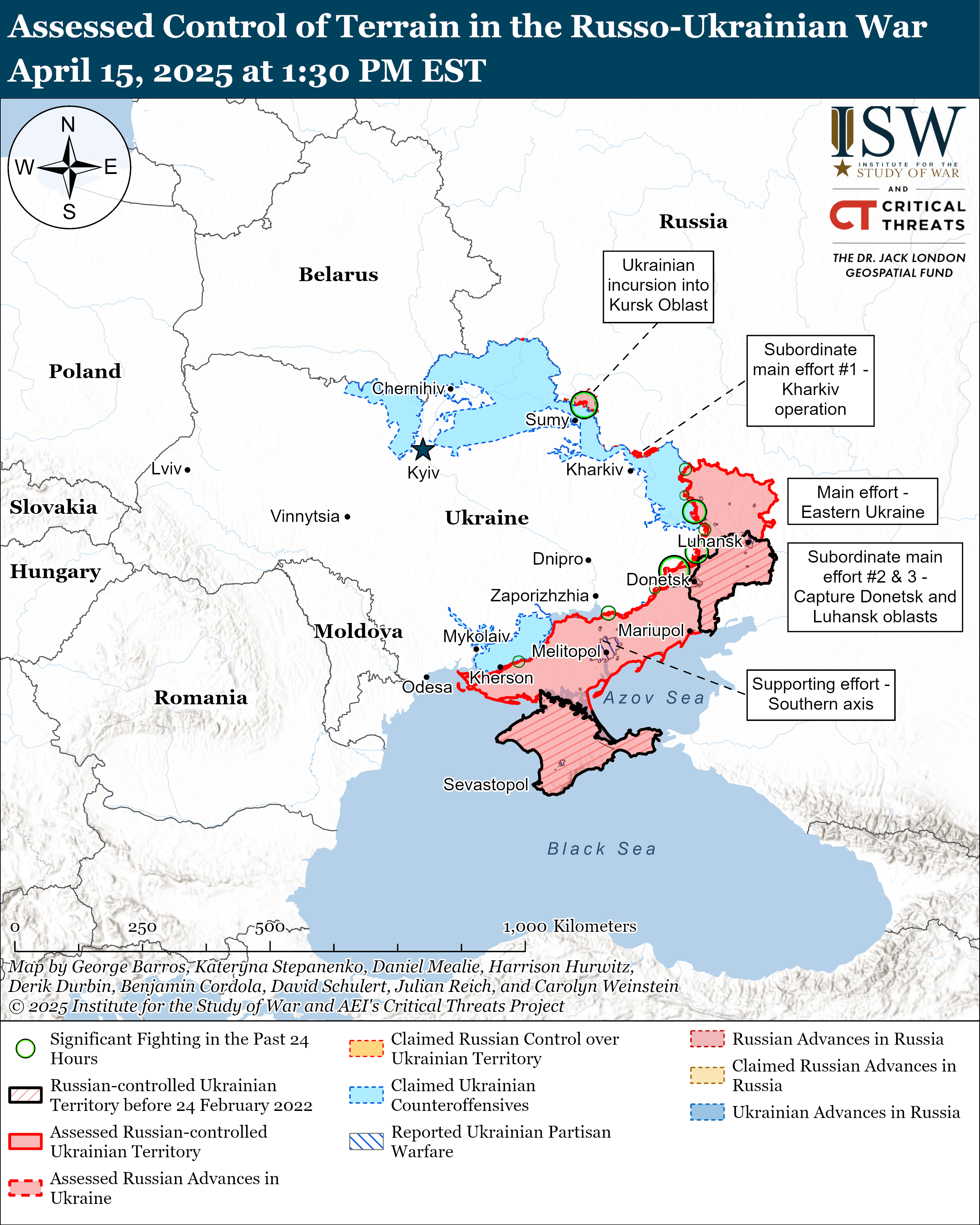
On April 13, for example, Russia fired ballistic missiles into the city of Sumy in north-eastern Ukraine, killing at least 35 civilians gathered to celebrate Palm Sunday and injuring over 100 more.
Military attacks have continued despite numerous meetings between senior Russian and US officials, and phone conversations where Trump and his Russian counterpart, Vladimir Putin, have spoken directly.
So, why are Trump’s efforts to end the war struggling to get off the starting blocks? The most important reason is that Russia is blocking progress. Moscow has created obstacles, deployed delaying tactics and has generally muddied the waters.

Trump’s major initiative is his proposal for a 30-day general ceasefire to prepare the way for broader peace negotiations. While Ukraine’s president, Volodymyr Zelensky, agreed to this immediately when it was proposed in March, Putin did not. He instead offered a counter proposal: a partial ceasefire banning attacks on energy infrastructure.
Russia relies heavily on the export of energy, especially oil, to fund the war. But Ukraine has been systematically targeting Russia’s oil refineries and storage facilities, mainly using domestically produced drones. Ukraine is estimated to have destroyed 10% of Russia’s refining capacity since the beginning of 2025.
By narrowing the scope of the ceasefire, Putin was able to shield Russia’s energy production while continuing to attack Ukraine. Moscow needs the fighting to continue to achieve its openly stated goal of controlling all of Donetsk, Luhansk, Kherson and Zaporizhzhia, the four regions of Ukraine it claimed to annex in 2022.
Another Russian tactic has been to take every opportunity to present a list of demands for Ukrainian concessions. These include Kyiv giving up its claims to Ukrainian territory occupied by Russia, abandoning its goal of joining NATO, and reducing its armed forces significantly. Russia also wants Ukraine to agree to a change of political leadership.
This tactic is important for two reasons. First, Russia’s demands make it clear that Moscow envisages the war as the first stage in a longer-term plan to exercise control over all of Ukraine, not only the annexed territories. And second, repeatedly stating Russia’s demands gets them into the public discourse.
When journalists – or, especially, US officials – repeat them, as Trump’s special envoy Steve Witkoff did recently, they gain an air of legitimacy. This creates the expectation that a peace agreement will comply with Moscow’s agenda.
Russia is also good at deflecting attention away from ending the war. Sometimes Putin does this with flattery and by appealing to Trump’s sense of self-importance.
In an interview about his March trip to Moscow, Witkoff glided over his failure to secure a pledge from the Russians to agree to a general ceasefire and instead conveyed a touching story demonstrating Putin’s regard for Trump.
Putin apparently told Witkoff that he went to church and prayed for Trump’s recovery after he narrowly escaped an assassination attempt during the election campaign. Putin also sent Witkoff back to the US with a portrait of Trump, painted by an artist who is known for producing flattering portraits of Putin himself.
Another effective tactic of deflection involves money. Russian officials dangle the prospect of lucrative deals involving trade and investment in front of Trump administration officials. This was evidently the focus of much of the first meeting between US and Russian officials in Saudi Arabia in February, although it was convened to discuss plans for peace.
It is also probably the reason for Kirill Dmitriev’s visit to Washington at the beginning of April. Dmitriev, a figure close to Putin and head of Russia’s sovereign wealth fund, confirmed to journalists that his discussions encompassed possible deals with the US involving rare earth metals, exploiting resources in the Arctic, and resuming direct flights between the US and Russia.
Trump’s role
While Russia places obstacles in the path of peace, Trump and his officials do nothing to remove them. This allows Moscow to continue waging war without constraints.
Despite Trump’s occasional tough talk about running out of patience with Moscow, as well as his threats of secondary tariffs on countries that buy oil from Russia, no measures that would put pressure on Russia have been implemented.
Trump has instead made excuses for Moscow. He described the attack on Sumy as a “mistake”, and has expressed admiration for Putin for dragging his feet to get a better deal with Washington.

This contrasts sharply with Trump’s dealings with Ukraine. Zelensky was publicly humiliated during his meeting with Trump and US Vice President J D Vance, in the Oval Office in February. Trump has even accused Zelensky of starting the war, which was launched by a mass invasion of Russian forces.
Trump and his team have shown far less interest in Ukraine’s security needs than in striking a lucrative deal to extract the country’s natural resources. The prospect of the Trump administration negotiating a peace agreement that the Ukrainians would accept seems remote.
So, where does this leave the peace process? When the partial ceasefire arrangement comes to an end later in April, Washington will have to decide whether to resume its efforts to secure a general ceasefire or chart a new course.
Based on his track record so far, Trump might just blame the Ukrainians for refusing to surrender to Russia’s terms, abandon attempts to reach a negotiated settlement to the war, and go straight to reestablishing normal relations with Russia.
Jennifer Mathers, Senior Lecturer in International Politics, Aberystwyth University
This article is republished from The Conversation under a Creative Commons license. Read the original article.

Russia is unbeatable- it’s got ‘eascalatory dominance’ in its own surounds (according to Obama). Regardless of the fake narratives- as exemplified by some here, Russia will win big, very big. Russia will go all the way to the Dnieper. If the West insists on fighting Russia, even Russian Odessa will return to its fold. Tough luck to the Western empire. The empire is more rotten than what people think.
It does not matter anymore. Russia is done as any kind of superpower. It’s weapons are garbage, it’s economy is in crisis, its glorious army turned into mercenary outlet paid to murder its neighbours. Whatever future holds – disintegration like USSR or turning into another North Korea – it will be tragic for generations, if not forever.
This war is an insane mistake under false pretences. Nobody believed that decadent Europe threatens them. There is no money to develop even Crimea they took a decade ago. It is as if Putin lost his mind. Russians should get out of Russia while they still can.
You sound like a typical neocon.
As usual, the US is trying to break Russia, but this time it isn’t working out.
If Russia is broke, why did the sanctions not destroy their economy. Why are they still coming out with new weapon systems like the Oreshnik, which the US and the EU have no countermeasures for. Russia was only sanctioned a zillion times, all to no avail. It did manage to break the EU, the freaking idiots. They gave away thgeir cheap, reliable Russian natural gas for expensive LNG.
And by the way, look at the latest World Bank numbers on Russia’s economy. You’re going to feel stupid for everything you just wrote.
Darling, I am from Russia. I actually watch and understand what Russians themselves are saying, from Russian Central bank and government all the way to Igor Lipsits. And I lived through dissolution of the USSR and roaring 90s. All English-language b.s. about wonderful economy is for westerners’ consumption. Russians are getting money out of Russia and investing in some stupid Dubai future bubble before they are robbed by Russian government. I wish I were wrong. I have friends there who will suffer through this.
Die Autorin schafft es offenbar nicht, die politische und wirtschaftlich Realitäten mit ihrer transatlantischen Agenda der “Demokraten” in Einklang zu bringen.
Verlieren zu akzeptieren wäre eine Tugend, um Menschen zu schützen.
You have to remember that this is a proxy war which was forced on Russia but has now gone badly. Trump is recognising this and trying to make amends to establish peace again. Russia has won this war and is right to demand terms which will secure its future security.
Forced on Russia? Like the Irish War of Independence was forced on England?
Total nonsense.
Russia has not won, it has just lost 150k men (in a country with a terrible TFR) and now has another Slavic nation on their border who hates them.
Was sie eine slawische (Nation) Volksgruppe nennen, ist eine Bevölkerungsgruppe eines seit 1100 Jahren bestehenden russischen Reiches.
Ukraine lost over a million soldiers, 3 separate armies that were trained and equipped by NATO.
Russia’s losses my equal 150,000, as this is a big war with lots of NATO help. But Russia has the meat grinder on full power, so they will keep on grinding until the west gives up or goes broke.
Russia has economy a size of Italy, but based on extraction of natural resources. The price of oil is already less than 60.
Putin expected to be done with Ukraine in two weeks. What insane fantasy make people think that he can actually win? Honestly, someone should have shot him before he went to Ukraine, to save both Russia and his legacy.