


Concerned about the impact of tourism on the environment, local governments in Bali and the neighboring East Nusa Tenggara island chain have separately imposed blanket bans on single-use plastics and initiated a year-long closure of Komodo Island, home of the world’s only flesh-eating dragons.
Bali’s ban on plastics and styrofoam, which may well be extended to nearby islands, is already in force in most supermarkets and stores and will be fully enforced across the island by June, with officials saying they hope to reduce plastic bag usage by 70% within the next year.
The Bali government is also planning a US$10 tax on foreign tourists to pay for the upkeep of traditional villages, but it seems bereft of ideas on how to upgrade the narrow, traffic-choked coastal road connecting the tourist belt to northern Bali’s Java ferry crossing.
Traffic congestion has become one of the worst threats to Bali’s tourist industry, which topped six million foreign visitors for the first time last year. So have road accidents with an average of 1,500 a year and 450 deaths, most of them motorcyclists.
The plastics ban is a direct response to a “Bye Bye Plastic Bag” campaign spearheaded by two teenage sisters who have won global recognition for their work in a country which has earned a reputation as the world’s second-biggest marine plastic polluter.
Friends say when the girls showed up at the office of former governor I Made Mangku Pastika to push their case two or three years ago, he appeared to pay only passing attention until they produced a petition of 350,000 signatures. After that, the campaign began to gain momentum.

Further to the east, local authorities have apparently persuaded the Forestry and Environment Ministry to close Komodo, the largest of 29 islands forming the region’s national park, to improve the natural habitat and help boost the wildlife population.
It would be similar to the drastic action taken by the Philippine government last year in closing the popular holiday island of Boracay, in the central Visayan region, which has now re-opened but only for a limited number of tourists for the next 12 months.
East Nusa Tenggara governor Victor Laiskodat, who has already imposed a moratorium on mining, announced last month he was considering closing the entire Komodo National Park for a year, but that was before he learned that only the ministry has the authority to do so.
Instead, Forestry and Environment Minister Siti Nurbaya Bakar, who like Laiskodat belongs to the National Democrat Party (Nasdem), one of the six parties in President Joko Widodo’s ruling coalition, has reportedly agreed to a plan under which tourists will only be allowed to observe the dragons from boats.
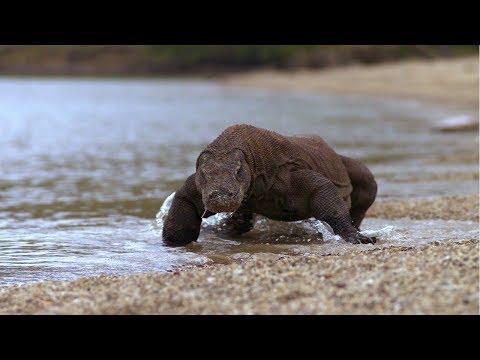
The East Nusa Tenggara administration has set aside 100 billion rupiah ($7 million) in its 2019 budget to restore the island’s habitat and facilities, which have fallen into disrepair since The Nature Conservancy (TNC), a US environmental organization, was shown the door in 2010.
TNC and the World Bank both funded a program undertaken by Putri Naga Komodo, a private group, aimed at regulating both tourism and fishing in the park. But its permit was withdrawn after only five years of operation.
“The reasons for the failure lie generally in the difficulty of managing complex social-ecological systems, and especially in the narrow design of the initiative,” Leeds Beckett University researcher Janet Cochrane wrote in a 2015 critique.
But she also blamed the ”political ecology of the Indonesian civil service, which despite anti-corruption efforts retains high levels of venality and weak environmental awareness.”
Laiskodat, the senior partner in a Jakarta law firm, has also suggested charging tourists $500, fifty times more than the current entrance fee, for a close-up look at the oversized lizards, which can grow to three meters long and weigh 70 kilograms.

“This is a rare place, only for people with money,” the governor told Kompas newspaper last November in a comment that would not have endeared him to most tourists. “Those who don’t have the money shouldn’t come because this place is only for extraordinary people.”
That, he said, could eventually mean charging $50,000 for the 20 or more cruise ships to drop anchor in the 1,800 square kilometer UNESCO World Heritage Site each year, and also limit visitors to 5,000 a month, about half the number who visit now, using on-line registration.
Tourism Minister Arief Yahya opposes the ban, saying that without a level of certainty required by travel agents and operators, blocked access and escalating charges could destroy the tourist industry in the region, which has become an extension of the Bali experience.
Sightseers are not the only problem. Park rangers have become increasingly concerned at a sharp increase in illegal poaching on the rugged 390 square kilometer Komodo island, much of which is roadless and covered in savannah and stunted forest.

Authorities say they are worried about a significant decline in the number of wild deer, water buffalo and goats, which are the main source of food for the carnivorous dragons, and that if nothing is done soon the animals may begin to prey on their own to survive.
Last month, a military patrol seized nine deer carcasses, the head of a buffalo and two modified rifles equipped with laser sights from poachers who had landed by motor boat on the adjacent island of Sumbawa after a shooting expedition on Komodo.
The Komodo park was initially established in 1980 to help conserve the remaining 2,500 dragons on Komodo and the two other large volcanic islands of Padar and Rincan, eventually earning World Heritage status in 1991. Then, in 1995, the government expanded protection to the surrounding sea as well.
A cornerstone of the so-called Coral Triangle, Komodo boasts one of the world’s richest marine environments, with reefs, mangroves and sea-grass beds harboring more than 1,000 species of fish and 260 species of reef-building corals.
——
Asia Times has relaunched on www.asiatimes.com. Download our brand new native App for a sweeping selection of geopolitical and business news from across Asia.

Hello, recognition you in regard to word! viagra erection after ejaculation http://viapwronline.com I repost in Facebook.
real viagra without a doctor prescription
Hi there, its nice paragraph about media print, we all be familiar with media is a great source of data.
Hello, blame you in spite of information! I repost in Facebook
Wow, fantastic blog layout! How long have you been blogging for?
you make blogging look easy. The overall look of your website is magnificent,
as well as the content!
I believe that is one of the such a lot significant information for me. And i’m happy studying your article. However should observation on some basic issues, The website taste is ideal, the articles is really great : D. Just right process, cheers
Hello, I enjoy reading through your article post.
I like to write a little comment to support you.
Discount Progesterone Worldwide On Line Free Consultation Next Day Delivery Chicago Amoxicillin Uses Diarrhea Comprar Tadalafil cialis 5 mg Viagra Avis Consommateur Cod Provera Zithromax 500 Mg
Amoxicillin Bp Faux Viagra Au Quebec cialis 5mg best price Cialis Viab
Generally I do not read post on blogs, but I would like to say that this write-up very forced me to try and do it!
Your writing style has been surprised me. Thanks, very great
post.
How to save a dragon in Indonesia – Asia Times http://situspokersport.com
This design is wicked! You obviously know how to keep a reader amused. Between your wit and your videos, I was almost moved to start my own blog (well, almost…HaHa!) Great job. I really enjoyed what you had to say, and more than that, how you presented it. Too cool!
A formidable share, I simply given this onto a colleague who was doing just a little analysis on this. And he in reality purchased me breakfast as a result of I found it for him.. smile. So let me reword that: Thnx for the treat! However yeah Thnkx for spending the time to debate this, I really feel strongly about it and love studying extra on this topic. If doable, as you turn out to be experience, would you thoughts updating your blog with more details? It is extremely helpful for me. Huge thumb up for this weblog submit!
Have you ever considered about adding a little bit more
than just your articles? I mean, what you say is fundamental and everything.
Nevertheless think about if you added some great visuals or videos to give your posts more, “pop”!
Your content is excellent but with images and videos, this website could
undeniably be one of the greatest in its niche. Fantastic blog!
My brother suggested I might like this website. He was totally right.
This post truly made my day. You can not imagine just how much time I had spent for this info!
Thanks!
Do you have any video of that? I’d care to find out some additional information.
I’m extremely impressed along with your writing talents as well as with the structure for your weblog.
Is this a paid subject matter or did you modify it your self?
Anyway keep up the excellent high quality writing, it’s rare to peer a
great blog like this one nowadays..
This is a topic that’s close to my heart… Best wishes! Where are your contact details though?
This is my first time pay a quick visit at here and i am in fact impressed to read all at alone place.
I for all time emailed this weblog post page to all my associates, since if like
to read it next my links will too.
Heya this is kinda of off topic but I was wondering if blogs use WYSIWYG editors or if you have to manually code with HTML.
I’m starting a blog soon but have no coding skills so I wanted
to get advice from someone with experience. Any help would be enormously
appreciated!