


The Pentagon released a video, on February 13, of a Russian T-72 tank being destroyed by an American drone attack in Syria, the most recent in a series of wrist-slaps intended to persuade Moscow to distance itself from Iran’s ambitions in Syria.
This follows an engagement with a force reportedly composed of Russian nationals working as “contractors” for the Assad government – an engagement in which American special forces killed 200 combatants and injured many others. The Russian contractors and a Russian-built tank reportedly attacked Syrian Democratic Forces (SDF) armed and advised by the US, and a Pentagon spokesman said that the US acted in self-defense.
Russia is not the target. On the contrary, US Defense Secretary James Mattis went out of his way last week to emphasize that Washington does not seek a confrontation with Russia, telling the Al-Monitor news site: “There were elements in this very complex battlespace that the Russians do not have control of. You can’t ask Russia to de-conflict something they don’t control.”
Russia has kept an official distance from irregular forces, giving the United States maneuvering room to attack them without directly compromising Russian interests. Washington’s objective is not to overthrow the Assad regime or to eject Russia from Syria, but rather to raise the cost of Russia’s support for Iran to the point that Moscow will allow the US and its allies to push Iranian forces out of Syria.
To some extent, that is already happening. The most important fact about the downing of an Israeli F-16 during a raid on Syrian air defenses on February 11 is that Russia had no hand in the matter. Israel has stated that its warplanes have flown about 2,000 sorties in Syria during the past two years, so it is surprising that no Israeli aircraft have been lost until now.
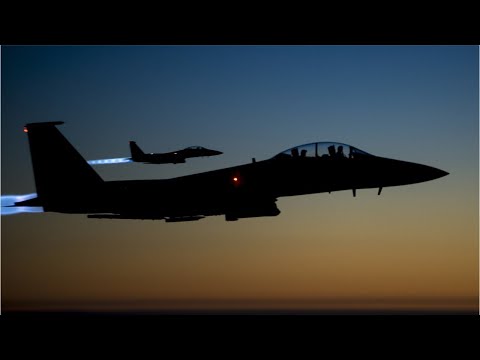
In retaliation for Iran’s reported attempt to penetrate Israeli airspace with a drone, Israel targeted Syria’s air defense system, and the Israeli military claims to have wiped out half of it. Syria threw every available anti-aircraft missile at the attacking Israeli jets, and an older Russian-made A-5 or A-7 exploded close enough to the F-16 to disable it. The injured Israeli pilots bailed out over Israeli territory.
Russia has installed its top-of-the-line S-400 system in Syria to protect its own forces, but it has not used it against Israel’s incursions. The S-400 is a formidable system, able to engage dozens of targets at a range of hundreds of kilometers, and could probably sweep the Syrian skies if Russia wanted it to. The fact that Russia has given Israel a free pass over Syria indicates that it will support Iran only if there is no penalty for doing so.
Russia does not want to find out whether Israel has the capability to destroy its S-400 installations on the ground, as Israeli air force officers have threatened in meetings with their Russian counterparts. Israel, for that matter, has no objection to a Russian presence in Syria, or the survival of the Assad regime, as long as Iran does not build up a permanent military presence in Syria.

In that respect, Israel appears to have the wholehearted backing of the United States against Iran. “Israel has an absolute right to defend itself, and I think that’s what happened yesterday,” Mattis said on February 12. “They don’t have to wait until their citizens are dying under attack before they actually address that issue. So when Syria, which has made no … excuse for what they’re doing alongside Iran, when they are providing throughout for Iran to give weapons, including more sophisticated weapons, to the Lebanese Hezbollah, Israel has an absolute right to defend themselves. It is interesting that everywhere we find trouble in the Middle East, you find the same thing behind it. Whether it be in Yemen or Beirut, or in Syria, in Iraq, you always find Iran engaged.”
Some Israeli strategists now believe that it would be in Jerusalem’s interest to fight a big war sooner rather than later. Iran’s game, the Israelis argue, is to use salami tactics to emplace ever-more-sophisticated ballistic missiles close to Israel’s borders. Iran’s ally, Hezbollah, has a reported inventory of 130,000 rockets and missiles, many of which have advanced guidance systems and the range to hit any target in Israel. Such targets include the chemical refineries in Haifa and storage tanks in Ashkelon, as well as population centers.
Israel’s missile defense system was able to neutralize the crude ballistic missiles fired in the past from Gaza, but could be overwhelmed in a new conflict. If Iran were to establish bases in Syria, move advanced weapons close to Israel’s border, and infiltrate such weapons into Gaza, Israel would eventually face a three-fronted war.
It is possible that Washington might offer additional incentives to Moscow to use its influence to persuade Iran to stand down, perhaps including some understanding about the Crimea
Israeli military doctrine states that if Hezbollah begins firing missiles at Israeli targets, the launchers should be eliminated. Hezbollah has embedded those launchers into civilian areas under its control, however, and Israeli efforts to neutralize the rockets would, according to one Israeli planner, lead to a “Dresden,” referring to the 1944 British raid on the German city that killed about 25,000 people in a firestorm. Hezbollah is an instrument of Iranian policy, but it is also a popular militia, and its civilian base is located in areas that might come under devastating attack were it to use its rocket arsenal against Israel.
The elements of Iran’s Islamic Revolutionary Guard Corps operating in Syria, and the militias they control — including Shia Muslims from Iraq, Afghanistan, and Pakistan — have no such compunction. If Iran positions its forces to fire large numbers of advanced missiles at Israel from Syria, Israel’s deterrence is far weaker than in the case of Lebanon. Iran is prepared to absorb military casualties, especially if those occur among the mercenary forces it deploys in Syria.
That is why Israel is far more concerned about an Iranian military presence in Syria than it is about Hezbollah. The 2006 Northern War occasioned by Hezbollah rocket fire into Israel ended in a standoff, because the United States ordered Israel to pull its punches. Hezbollah, in the interim, has accumulated a much larger and more power arsenal, but Israel’s American ally is less likely to restrain it from devastating retaliation.
For the time being, Iran does not want a war in Syria. After the December and January protests in 80 Iranian cities, the regime feels pressure from popular discontent over the diversion of resources from an ailing internal economy to a foreign military adventure. If the Iranian regime were to be humiliated militarily in Syria, the effect would be similar to Russia’s withdrawal from Afghanistan in 1988, a year before the fall of the Berlin Wall and the collapse of Communism. The Islamic Revolutionary Guard Corps still has control of most of the guns and the money, but a major setback might weaken its political position fatally. Economic misery and spontaneous protests do not bring down regimes, but military defeats do.

The IRGC has the difficult task of demonstrating its prowess against Israel in order to justify expenditures in Syria of anywhere between US$5bn and US$20bn a year, without actually provoking a war that it might lose. And if Hezbollah engaged Israel and suffered massive losses— civilian as well as military — the Shia cause would suffer a devastating loss with nothing to show for it but a few hundred dead Israeli civilians. That probably explains Iran’s dispatch of a drone into Israeli airspace, as a test of Israeli responses. Israel responded “disproportionately,” and punished the Assad regime by eliminating much of its air defense capacity whilst also destroying the Iranian command post that launched the drone. Notably, Israel did so with American applause.
Washington would probably like Moscow to inform its Iranian partners that if they use Syria as a base to threaten Israel, they cannot count on Russian support. Iran then might quietly withdraw its forces to some distance from the Israeli border and de-escalate.
It is also possible that Washington might offer additional incentives to Moscow to use its influence to persuade Iran to stand down, perhaps including some understanding about the Crimea. There are no static scenarios, however, but a series of negotiations in which none of the players knows how the others will respond, or how one player will respond to others’ responses. Although all players would prefer to avoid war, it is far from certain that war can be avoided.

One difference, Gorbi didn’t believe the "holy mission" of communism, Rohani still. And when you believe, you can burn all ressources.
David Goldman As long as there is threat to iran if that make you feel any better.
David Goldman There were millions Chinese worked under Japane occupation too, it did not make Japanese occupation any more legit. Israel is a "apartheid" state who steals from its neighbors and mistreat them to justfy their dispictable action.
Talkestan , to call Israel "apartheid" is silly. There are 2 million Israeli Arabs who vote in the same elections and stand before the same judges as Israeli Jews. There are Arab MK’s, an Arab justice on the Supreme Court, and so forth. You can’t even spell the term, much less understand it.
The Russians also said "never." 🙂
David Goldman Listening to you I’m just amazed that Iran actually survives or even exists any longer. Then I remember: never ever trust someone who supports Zionism and Aparthid, like I wouldn’t trust a fascist – not because of ‘facts’ or ‘lies’, but because such irrational people cannot process and analyse information usefully. They are just searching to see what information can be used to ‘prove’ their prejudices, so they can sleep better.
David, I’m no fan of the specific regime in Iran or in most other countries, but I believe there’s going to be regime changes in USA and Israel before Iran. That’s because a) Apartheid Israel – just like Nazi Germany and Apartheid South Africa – is an insult to the both Judaism and the human spirit, and so the whole world wants it gone, and b) the US empire, having somehow skipped the ‘civilised’ phase, is a sad mix of barbarism and decadence, close to its extinction. Like the British one, the US empire will drown itself in military excesses.
Talkestan , Iran suffers from demograpic, financial and environmental disasters, as well as an epidemiological one: the chlamydia infection rate is 25 times the US level and probably explains the highest infertility rate in the world (over 20%). That’s due to temporary marriage (in which the mullahs are the pimps). I don’t make this stuff up; my sources are all official Iranian ones. I just bother to read. See http://www.atimes.com/atimes/Middle_East/MID-02-300115.html
The Mossad doesn’t give me talking points (but indirectly I might give talking points to Mossad).
Yeah we remember your ‘Iran’s population disaster’ too. Now it’s the economy that apparently is a ‘disaster’.
Does Mossad give you new talking points for each season?
Border skirmishes are a distraction. The real strategic imperative is for Damascus to recover control over their oil fields. The Russians can provide the air cover to ground troops from thye Syrian Army, and their allies.
Putin obviously must pick his battles carefully, since the US/NATO has Russia surriunded in the West by land and by sea, at virtually point blank range. The Russian military can’t be streched at home and in the Mediterranean. There’s no reason for Russia to do the US or ISrael any favors or deals, since there’s nothing in it for the Kremlin.
If Israel feels it’s in its "basic self-interest" to try and run Iran out of Syria and Hezbollah out of Lebanon, let the Israelis do it themselves without any assistance whatsoever from us. The US has no true strategic interest in imposing maximal Israeli hegemony on the region. We’ve already paid enough in pursuit of that inane goal.
Quoting the article"
"Washington’s objective is not to overthrow the Assad regime or to eject Russia from Syria, but rather to raise the cost of Russia’s support for Iran to the point that Moscow will allow the US and its allies to push Iranian forces out of Syria"
and
"It is interesting that everywhere we find trouble in the Middle East, you find the same thing behind it. Whether it be in Yemen or Beirut, or in Syria, in Iraq, you always find Iran [ Israel] engaged.”
It is Israel who has ambitions to expand into a greater Israel. She has all the reasons to covet the lands of Syria, Iraq, Jordan and Turkey.
Israel is the last European colony and in that sense is the aggressive intrusive force in the Middle East.
and I firmly believe this:
In the battle against the Jewish quest to dominate the world the use of the Bible and the Talmud is essential
and
In order for the Jews to achieve such power they can only do that through the Christian faith. They know that and I believe Communism was created as an alternative route for Jews to achieve this goal.
they cannot achieve it on their own nor by the use of other faiths.
The US nearly went to war with Russia over missiles in Cuba; Russia nearly attacked the West in 1983 (Operation Able Archer) over the Pershing missiles in Europe. Israel’s preemption of Iranian missile emplacements in Syria follows the same strategic logic that motivated the US and Russia at various points of the Cold War and should be no surprise to anyone. Look at the objective correlation of forces (including Iran’s economic/financial/demographic/environmental crises) and basic self-interest of the participants rather than "would," "should," etc.
Iran’s "Shiite empire" is a figment of your overheated imagination. It supports Shiites like the Hazara in Afghanistan, but they are never going to be the basis for an empire. Afghan Shia, Bahraini Shia, Saudi Shia, Iraqi Shia and, to a lesser extent, Lebanese Shia have all been mistreated by the Sunni minorities/majorities that have ruled them. Iran has provided what support it could to them which, on the whole, was fairly meager. But since the US has been destabilizing the Middle East at the behest of Israel and engaged in serial regime change fiascoes, new strategic vistas have opened up for Iran.
Given the lamentable state of the Arabs and the revulsion with which Israel is viewed at the popular level, there are only two real sources of potential regional leadership–Iran and Turkey. Both can overplay their hand, as Turkey has done in Syria and as Iran could easily do as well. But the two, if they can sustain a modus vivendi, represent the best hope for restabilizing the region. Of course, Israel doesn’t want this outcome, but again, so what?
First of all, what exactly is the nature of the Iranian threat to Israel either in Lebanon or Syria? Hezbollah’s weapons are principally a deterrent to Israeli action, not the basis for unprovoked offensive action. Israel is used to doing what it wants, when it wants, and where it wants in other countries of the region, and the Hezbollah/Iranian deterrent in Lebanon and, potentially, Syria threatens that hegemonic dominance. Israel doesn’t like that, but so what?
Israel seems to feel that it is entitled to a monopoly of advanced weapons across the spectrum–especially precision missiles, IRBMs and ICBMs and nuclear weapons. Sorry, but ensuring that monopoly to keep Israel happy is not on my to-do list. And a robust military presence in southern Syria creates a bargaining chip for Syria to use in pursuit of regaining the Golan (which, of course, Israel has no intention of giving back, but we’ll see where things go.)
It’s certainly true that Russian and Iranian (and Syrian) strategic goals in Syria are not congruent, and Russia, in general, is inclined to accomodate many of Israel’s endless demands, unlike Iran, but at the regional and global level, Russian and Iranian strategies converge–largely because of incompetent, Israel-infected US strategy, so Russia simply showing Iran the door is not in the cards. And if anyone thinks that killing 200 Russians (if that’s the right number) is going to induce Putin to lower the boom on Iran, he’s absolutely insane.
Iran reminds of Jules Verne’s Phineas Fogg, who buys a coastal steamer in the US to cross the Atlantic. It can’t carry enough fuel so he burns all the wooden fixtures en route, hoping to reach Liverpool. Iran’s economy is incomparably worse than Russia’s in 1988. As I’ve explained in these pages, it is in deep crisis. In many parts of the country it is literally out of water. The equivalent of reaching Liverpool for Iran is establishing its Shi’ite empire from the Afghan border to the Mediterranean. If it suffers imilitary reverses, the regime will collapse. Russia spent three centuries at war with Persia, and there is no love lost. A major interruption of Iranian oil shipments (for example) would only benefit Russia. There are lots of nasty things the US could do here. It just killed a couple of hundred Russian "contractors." What would happen if US warplanes killed a few hundred of Iran’s Shi’ite mercenaries in Syria — the ones Iran doesn’t officially acknowledge? They aren’t supposed to be there, so it’s open season. I don’t know exactly what the US has in mind, but it doesn’t take much imagination to see what would happen to Iranian-backed irregulars without Russian air support. Combine that with a bit of help for ethnic rebels in Iran, sanctions here, a computer virus there, and things could get very dodgy quickly.
Sometimes one need to read propaganda in the form of analysis like this piece to really understand the confused state of foreign policy elites in Washington beltway, my worst fear is that their mind will not replace reality with these propagandas and passed it on to the next generation of decision makers. Because when lies is repeated often enough it is accepted as the truth. No one wants messianic presiding over world affairs.
The question is what Iran wants to happen in Syria. USA is inept and its wishes are irrelevant, and Russia knows how to behave itself in Iran’s backyard.
Stuart Budgen Israel has no power other than what its American masters grant. What else can you expect from pathetic Israel, the largest begging bowl on the planet?
A iranian diplomat said to Alexandre Adler that what Gorbatchev did with withdrawing Soviet troops from his "Empire" in late 80’s, Iran will NEVER do that with Lebanon, Syria and Iraq.
Israel is an artificial state and the noose will get tighter and tighter around its neck. Granted that the clown in the white house gave it an extension in life, but in 3 years when his Asset is thrown out…Israel will also go down…its just a wait and see game in Syria…Assad and Iran just need to continue flushing out the Israeli created terrorists and slowly push them out along with American terrorists. This game is over whether you like it or not….Russia has no choice but to support Iran because if they loose Iran, all the terror group will be right in suburb of Moscow. They either have to pay now or later. In 2015, Putin got the message and finally engaged himself in Syria….They need Iran more than they need US or Israel.