


The Pentagon released a video, on February 13, of a Russian T-72 tank being destroyed by an American drone attack in Syria, the most recent in a series of wrist-slaps intended to persuade Moscow to distance itself from Iran’s ambitions in Syria.
This follows an engagement with a force reportedly composed of Russian nationals working as “contractors” for the Assad government – an engagement in which American special forces killed 200 combatants and injured many others. The Russian contractors and a Russian-built tank reportedly attacked Syrian Democratic Forces (SDF) armed and advised by the US, and a Pentagon spokesman said that the US acted in self-defense.
Russia is not the target. On the contrary, US Defense Secretary James Mattis went out of his way last week to emphasize that Washington does not seek a confrontation with Russia, telling the Al-Monitor news site: “There were elements in this very complex battlespace that the Russians do not have control of. You can’t ask Russia to de-conflict something they don’t control.”
Russia has kept an official distance from irregular forces, giving the United States maneuvering room to attack them without directly compromising Russian interests. Washington’s objective is not to overthrow the Assad regime or to eject Russia from Syria, but rather to raise the cost of Russia’s support for Iran to the point that Moscow will allow the US and its allies to push Iranian forces out of Syria.
To some extent, that is already happening. The most important fact about the downing of an Israeli F-16 during a raid on Syrian air defenses on February 11 is that Russia had no hand in the matter. Israel has stated that its warplanes have flown about 2,000 sorties in Syria during the past two years, so it is surprising that no Israeli aircraft have been lost until now.
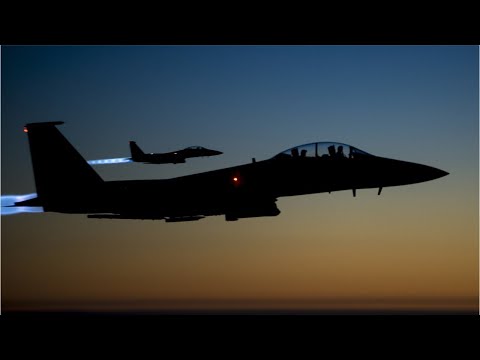
In retaliation for Iran’s reported attempt to penetrate Israeli airspace with a drone, Israel targeted Syria’s air defense system, and the Israeli military claims to have wiped out half of it. Syria threw every available anti-aircraft missile at the attacking Israeli jets, and an older Russian-made A-5 or A-7 exploded close enough to the F-16 to disable it. The injured Israeli pilots bailed out over Israeli territory.
Russia has installed its top-of-the-line S-400 system in Syria to protect its own forces, but it has not used it against Israel’s incursions. The S-400 is a formidable system, able to engage dozens of targets at a range of hundreds of kilometers, and could probably sweep the Syrian skies if Russia wanted it to. The fact that Russia has given Israel a free pass over Syria indicates that it will support Iran only if there is no penalty for doing so.
Russia does not want to find out whether Israel has the capability to destroy its S-400 installations on the ground, as Israeli air force officers have threatened in meetings with their Russian counterparts. Israel, for that matter, has no objection to a Russian presence in Syria, or the survival of the Assad regime, as long as Iran does not build up a permanent military presence in Syria.

In that respect, Israel appears to have the wholehearted backing of the United States against Iran. “Israel has an absolute right to defend itself, and I think that’s what happened yesterday,” Mattis said on February 12. “They don’t have to wait until their citizens are dying under attack before they actually address that issue. So when Syria, which has made no … excuse for what they’re doing alongside Iran, when they are providing throughout for Iran to give weapons, including more sophisticated weapons, to the Lebanese Hezbollah, Israel has an absolute right to defend themselves. It is interesting that everywhere we find trouble in the Middle East, you find the same thing behind it. Whether it be in Yemen or Beirut, or in Syria, in Iraq, you always find Iran engaged.”
Some Israeli strategists now believe that it would be in Jerusalem’s interest to fight a big war sooner rather than later. Iran’s game, the Israelis argue, is to use salami tactics to emplace ever-more-sophisticated ballistic missiles close to Israel’s borders. Iran’s ally, Hezbollah, has a reported inventory of 130,000 rockets and missiles, many of which have advanced guidance systems and the range to hit any target in Israel. Such targets include the chemical refineries in Haifa and storage tanks in Ashkelon, as well as population centers.
Israel’s missile defense system was able to neutralize the crude ballistic missiles fired in the past from Gaza, but could be overwhelmed in a new conflict. If Iran were to establish bases in Syria, move advanced weapons close to Israel’s border, and infiltrate such weapons into Gaza, Israel would eventually face a three-fronted war.
It is possible that Washington might offer additional incentives to Moscow to use its influence to persuade Iran to stand down, perhaps including some understanding about the Crimea
Israeli military doctrine states that if Hezbollah begins firing missiles at Israeli targets, the launchers should be eliminated. Hezbollah has embedded those launchers into civilian areas under its control, however, and Israeli efforts to neutralize the rockets would, according to one Israeli planner, lead to a “Dresden,” referring to the 1944 British raid on the German city that killed about 25,000 people in a firestorm. Hezbollah is an instrument of Iranian policy, but it is also a popular militia, and its civilian base is located in areas that might come under devastating attack were it to use its rocket arsenal against Israel.
The elements of Iran’s Islamic Revolutionary Guard Corps operating in Syria, and the militias they control — including Shia Muslims from Iraq, Afghanistan, and Pakistan — have no such compunction. If Iran positions its forces to fire large numbers of advanced missiles at Israel from Syria, Israel’s deterrence is far weaker than in the case of Lebanon. Iran is prepared to absorb military casualties, especially if those occur among the mercenary forces it deploys in Syria.
That is why Israel is far more concerned about an Iranian military presence in Syria than it is about Hezbollah. The 2006 Northern War occasioned by Hezbollah rocket fire into Israel ended in a standoff, because the United States ordered Israel to pull its punches. Hezbollah, in the interim, has accumulated a much larger and more power arsenal, but Israel’s American ally is less likely to restrain it from devastating retaliation.
For the time being, Iran does not want a war in Syria. After the December and January protests in 80 Iranian cities, the regime feels pressure from popular discontent over the diversion of resources from an ailing internal economy to a foreign military adventure. If the Iranian regime were to be humiliated militarily in Syria, the effect would be similar to Russia’s withdrawal from Afghanistan in 1988, a year before the fall of the Berlin Wall and the collapse of Communism. The Islamic Revolutionary Guard Corps still has control of most of the guns and the money, but a major setback might weaken its political position fatally. Economic misery and spontaneous protests do not bring down regimes, but military defeats do.

The IRGC has the difficult task of demonstrating its prowess against Israel in order to justify expenditures in Syria of anywhere between US$5bn and US$20bn a year, without actually provoking a war that it might lose. And if Hezbollah engaged Israel and suffered massive losses— civilian as well as military — the Shia cause would suffer a devastating loss with nothing to show for it but a few hundred dead Israeli civilians. That probably explains Iran’s dispatch of a drone into Israeli airspace, as a test of Israeli responses. Israel responded “disproportionately,” and punished the Assad regime by eliminating much of its air defense capacity whilst also destroying the Iranian command post that launched the drone. Notably, Israel did so with American applause.
Washington would probably like Moscow to inform its Iranian partners that if they use Syria as a base to threaten Israel, they cannot count on Russian support. Iran then might quietly withdraw its forces to some distance from the Israeli border and de-escalate.
It is also possible that Washington might offer additional incentives to Moscow to use its influence to persuade Iran to stand down, perhaps including some understanding about the Crimea. There are no static scenarios, however, but a series of negotiations in which none of the players knows how the others will respond, or how one player will respond to others’ responses. Although all players would prefer to avoid war, it is far from certain that war can be avoided.

David, some people hate what you say because it is true. Preach the good word.
It is not a bad idea to humiliate Iran by 3-5 day air borne Israeli bombing raids.The US could press the Saudis to foot the bill.The mullahs in Iran have gotten too big for their cloaks.
The only down side to this preemptive expedition is that Iranian nuclear reactors could still go operating unscathed and Israel would invite reprisal missile attacks by Hezbollah with the Islamic countries vowing revenge led by Saudi Arabia or GCC.
Israel has become an arrogant nation used to having its way,its ability to plan meticulously has been blunted by a petulant smugness of its own achievements underwritten by total American support.
Why is this story so watery? The number of times Bibi has panted into Moscow jettisoning his dignity somewhere over the Ukraine suggests its cooked.
So another sad day in Syria. Somebody taking they oil field, they land, they lives. Not first time. Another neocolonial, endless war.
Talkestan, lol, but they have held on even before anything like America existed. Israel has been ever before the origin of ur first ancestry. ‘What makes you think you can stop them now?
How does any one think that Iran will go far by sponsoring terror groups in the middle east? Iran’s ambitions in the middle east will only create chaos and disorder for many years to come. countries and economies will be destroyed as in Syria and yemen, breeding disease and porverty, can this make iran and her allies strong? Granted, it appears some Gulf states and orgarnisations and some Arabs donate money to iran to sponsor chaos in the middle east, i think this is Irans greatest strenght. Iran uses every war situation in the middle east to test it’s weapons and gain experience at the expense of millions of arab lives been lost in this chaotic situations. These wars in the middle east are also creating problems for other countries through refugee crises. Even if Iran emerges the super power of the middle east after many years of destruction, which is doubtful, it cannot successfully nuetralize the many terror groups it has engaged. It is evident that most of these terror groups that are working for iran today may work against her tomorrow.
Just think about it, American equipment and forces killed 200 Russians and injured enough without any response from the Russians.Is that still propaganda to you
Iran will be destroy soon,because its a terrorist state.God will punish him and all it’s supporters.
Written by a true zionist
Jo Snow Israeli Arabs are native to Israel and having legitimate rights over that nation. Moreover Israel is a democratic nation unlike certain nations like China, where the junta survives over it’s own citizens selling false propaganda.
David Goldman
Yes, or to put it more simply, he was a fool.
So, is Bibi going to the Big House, Goldman? Quelle tragédie!
"The Iranian threat is to emplace sophisticated missiles in Syria operated by militias controlled and advised by the IRGC, which target sensitive Israeli facilities at a level sufficient to make life in Israel difficult."
I don’t understand. What do you mean by "making life in Israel difficult"? Does Israeli targeting of other countries with nuclear weapons make life "difficult" for them?
The only thing that would be difficult for the government of Israel would be a deterrent–in the form of precision SSMs–that would impede intrusive Israeli air operations in Syria. Again, Israel doesn’t like being deterred, but so what?
In any case, your claim that Iran is on the verge of emplacing such weapons is purely speculative. It’s amusing that pro-Israel windbags whine about the hypothetical threat of Iranian missiles in Syria without acknowledging that Israel just made the decision to start building a large precision SSM arsenal of its own. So as with nuclear weapons, IRBMs and ICBMs, Israel complains endlessly about some possible future acquisition of precision tactical SSMs by Iran while fielding its own force in the present or near future. This is from a 2 Feb 18 Ha’aretz article on the subject:
"Defense minister Avigdor Lieberman has instructed the Israel Defense Forces to establish a new force of ground-to-ground missiles with a range of up to 300 kilometers, the Yedioth Ahronoth daily reported on Friday."
Don’t you ever get tired of dishing out this kind of hypocrisy, Goldman?
The US decision was not "to install a Shia regime in Iraq." The decision was that preventing the election of a Shia PM by the Shia majority would have been too obviously a hypocritical and self-serving subversion of the "democracy" the US had promised, to reluctantly, we were forced to accede to Shia demands for a 2005 election.
Obviously, we could have avoided the whole mess by not conspiring to overthrow Saddam simply for the purpose of making Iraq and the whole region safe for Israel.
I’m gonna put my money on the Iranians this time. They have plenty of cannon fodder in the Afghans and the Russians begrudgingly, need the Iranians there to balance them out. Iran keeps sending in cannon fodder and Russia partially controls the sky’s, doing some cover for the Shia axis. Russia won’t help weaken Iran’s contingent while everything is still in flux. Israel will continue to lose planes. This will end with Israels defeat, the USA in four years will ask it’s boys to go home when the democrats win.
Goldman displays abysmal ignorance of Russian, Iranian. Jewish, and Muslim history. Although he is right that Islam (Sunni) peaked around 1100 and was in full retreat after the Siege of Vienna in 1683. But Shia Islam, especially of Iranian variety began only in 1500 and is now flowering today.
Does Goldman understand the socio-economic differences between free trading Shia Islam and trade controlling Sunni one? Today, the aims of China, Russia, and Iran coincide – free trade, opposed by Sunnis and Jews alike. The Silk Road has been cleared of the Sunnis, Jews are next.
Of course Balfour was a convinced Christian Zionist, so is Trump. While Catholics/Orthodox openly pogromed Jews, Protestants hate Jews but love Israel, the dumping ground. "Catholic" Hitler and Protestant Balfour had same aim – to rid Europe of Jews, only by different means.
When Sunni Islam peaked, so did Judahism, their allies for 13 centuries until Balfour sowed enmity between the two by creating competing land claims of Israel. Balfour knew well that Sunnis will do his job one day. Today, save for America, Jews all aound the world are surrounded by many times Sunnis who are getting angrier by the hour.
Mossad is manned by people who are rational. But with Goldman claiming that he advises Mossad god help the Jews. No wonder CIA in 2008 predicted Israel to end within 20 years. Judahist Israel 1948-2028 RIP.
Russia and Iran are stabilizing factors in the Greater Middle East.
Iran, especially in the face of sanctions and covert acts of war and assassinations, shows much (MUCH) more maturity than all his neighbours (Pakistan, Turkey, KSA, Afghanistan).
So, why is IL not striking some deals with Iran rather than (until recently) with Turkey and Saudi Arabia? How many Mavi Marmara incidents do you IL sympathizers want to have?
Moreover, Syria and Iraq, even if they have shia support and shia governments, are pretty far away to get any more religious than they are, which is little in comparison to sunni countries.
As an european, I am more concerned with a sunni crescent (a reality, in fact) than all your scaremongering about Iran. And so are european jews for that matter.