


To many Chinese, the only time they can enjoy a striptease is at a funeral, especially in the rural areas where the somewhat obscene performance has become a ritual.
Not anymore. Just before the Lunar New Year, the Ministry of Culture launched its latest crackdown targeted at striptease dancers and other obscene, pornographic or vulgar performances at funerals, weddings and seasonal gatherings in 19 cities across four provinces – Henan, Anhui, Jiangsu and Hebei.
One could assume that rural villagers are conservative, but striptease dances are enjoyed by farmers, especially among the elderly who believe that bigger attendances at funerals honor the dead and bring them good fortune.
And nothing draws more people to a funeral than a striptease. Indeed, people often pay substantial sums for these special performances.
The Global Times, an official Beijing mouthpiece, has reported that rural households are now more inclined to show off their disposable income by paying out several times their annual income to actors, singers, comedians, and – most recently, strippers – to “comfort” the bereaved and entertain the mourners.
The crackdown on this custom of funeral strippers has been long and hard. Beijing first began clamping down on “obscene” performances as early as 2006 and launched a second campaign in 2015, but it did not stop the funeral dances.
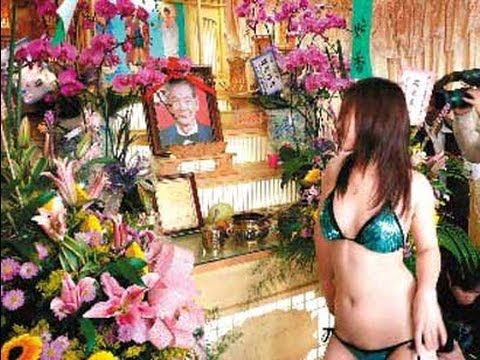
This time, however, it has been said that informers will be offered financial incentives via a special hotline or a website for funeral misdeeds.
The crackdown targets an activity which the government feels might cause cultural embarrassment.
In the eastern area, the most common show at funerals has been Mu Lian, an apostle of Gautama Buddha who saved his evil mother. But the highlights are mocking dialogue that makes fun of monks and their sex ability.
In Guizhou, a common play at funerals is titled “Flirt With A Goddess”, in which the ninth episode dramatizes different sexual positions.
Such practices have also gone on for years in Taiwan. In the 1980s, the family of a deceased gangster hired strippers to dance on electric flower cars during a funeral. Hiring strippers at funerals then became popular on the island and the custom was brought to the mainland by hundreds of gangsters who fled crackdowns by the Taiwanese government in the 1990s.
In 2011, anthologist Marc Moskowitz made a documentary called “Dancing for the Dead: Funeral Strippers in Taiwan” about this rural practice in Taiwan. People interviewed said striptease dances can divert wandering spirits’ attention so that they will not create trouble during a funeral, while others said a funeral bustling with noise is in any case better than a silent one.


Bobby Ingram
This is part of a propaganda campaign to denigrate Chinese people. The videos are made up of scenes from nightclubs, etc. If the chinese government crack down on such practices, it announces such crackdowns on tv and other media and there had been no such announcements.
Provision of entertainment by rich families was practised in the past when the entire family gather at the ancestor’s grave for 3 to 6 MONTHS and give respect to the deceased. The eldest son was expected to tend to the parent’s grave for three YEARS,
Current practises may include entertainment during funeral rites that last as long as twi weeks, usually waiting for all children to return from iverseas or faraway places before the burial. Strip teases and other pornographic acts are never allowed.
Learn something about chinese culture and not cheap, offensive lles, and demonisation. You only show that you are a naive fool.
Ken Nguyen , which lie is the most offensive to you ?
Outrageous lies in this article! The author evidently was not brought up properly by his parents.