


This is the second in a two-part series. Read part one here.
Globalization has always had its critics – but until recently, they have come mainly from the left rather than the right.
In the wake of the Second World War, as the world economy grew rapidly under US dominance, many on the left argued that the gains of globalization were unequally distributed, increasing inequality in rich countries while forcing poorer countries to implement free-market policies such as opening up their financial markets, privatizing their state industries and rejecting expansionary fiscal policies in favour of debt repayment – all of which mainly benefited US corporations and banks.
This was not a new concern. Back in 1841, German economist Friedrich List had argued that free trade was designed to keep Britain’s global dominance from being challenged, suggesting:
When anyone has obtained the summit of greatness, he kicks away the ladder by which he climbs up, in order to deprive others of the means of climbing up after him.
By the 1990s, critics of the US vision of a global world order such as the Nobel-winning economist Joseph Stiglitz argued that globalization in its current form benefited the US at the expense of developing countries and workers – while author and activist Naomi Klein focused on the negative environmental and cultural consequences of the global expansion of multinational companies.
Left-led mass demonstrations broke out, disrupting global economic meetings including, most famously, the World Trade Organization (WTO) in 1999. During this “battle of Seattle,” violent exchanges between protesters and police prevented the launch of a new world trade round that had been backed by the US president, Bill Clinton.

For a while, the mass mobilization of a coalition of trade unionists, environmentalists and anti-capitalist protesters seemed set to challenge the path towards further globalization – with anti-capitalism “Occupy” protests spreading around the world in the wake of the 2008 financial crash.
In the US, a further critique of globalization centered on its domestic consequences for American workers – namely, job losses and lower pay – and led to calls for greater protectionism.
Although initially led by trade unions and some Democratic politicians, this critique gradually gained purchase in radical right circles that opposed giving any role to international organizations such as the WTO, on the grounds that they impinged on American sovereignty. According to this view, only by stopping foreign competition whose low wages undercut American workers could prosperity be restored. Immigration was another target.
Donald Trump in his second term as US president has transformed these criticisms into radical, deeply disruptive economic and social policies – with tariffs and protectionism at their heart. In so doing, Trump – despite all his grandstanding on the world stage – has confirmed what has long been clear to close observers of US politics and business: that the American century of global dominance, with the dollar as unrivaled number one currency, is drawing rapidly to a close.
Even before Trump first took office in 2017, the US had begun to withdraw from its leadership role in international economic institutions such as the WTO. Now, the strongest part of its economy, the high-tech sector, is under intense pressure from China, whose economy is already bigger than that of the United States by one key measure of GDP. Meanwhile, facing the majority of US citizens are stagnant incomes, higher prices and more insecure jobs.
In previous centuries, when first France and then Great Britain reached the end of their eras of world domination, these transitions had painful impacts beyond their borders. This time, with the global economy more closely integrated than ever before and no single dominant power waiting in the wings to take over, the impacts could be felt even more widely – with very damaging, if not catastrophic, results.
Why no one is ready to take the US’s place
When it comes to taking over from the US as the world’s leading hegemonic power, the only viable candidates with big enough economies are the European Union and China. But there are strong reasons to doubt that either could take on this role.
That’s notwithstanding the fact that in 2022, then US president Joe Biden’s National Security Strategy called China: “The only competitor with both the intent to reshape the international order and, increasingly, the economic, diplomatic, military and technological power to do so.” At times Biden’s successor, President Trump, has sounded almost jealous of the control China’s leaders exert over their national economy, and the fact they do not face elections and limits on their terms in office.
But a one-party, authoritarian political system that lacks legal checks and balances is a key reason China will find it hard to gain the cultural and political dominance among democratic nations that is part of achieving world number one status – despite the influence it already wields in large parts of Asia and Africa.
China still faces big economic challenges too. While it is already the global leader in manufactured goods (rapidly moving into high-tech products) and the world’s largest exporter, its economy is still very unbalanced – with a much smaller consumer sector, a weak property market, many inefficient state industries that are highly indebted and a relatively small financial sector restricted by state ownership. Nor does China possess a global currency, despite its (limited) attempts to make the renminbi a truly international currency.
I found on a reporting trip to Shanghai in 2007 to investigate the effects of globalization, there were enormous differences between China’s prosperous coastal megacities – whose main thoroughfares rival New York and Paris – and the relative poverty in the interior, especially in rural areas. Nearly two decades on from that visit, with the country’s growth rate slowing, many university-educated young people are also finding it hard to find well-paid jobs now.
Meanwhile, Europe – the only other contender to take the US’s place as global number one – is deeply politically divided, with smaller, weaker economies to the east and south far more skeptical about the benefits of globalization, and increasingly divided on issues such as migration and the Ukraine war.
The challenges of achieving broad policy agreement among all member states and the problem of who can speak for Europe make it unlikely that the EU as currently constituted could initiate and enforce a new global world order on its own.
The EU’s financial system also lacks the heft of the American one. Although the EU has a common currency (the euro) managed by the European Central Bank, its financial system is far more fragmented. Banks are regulated nationally, and each country issues its own government bonds (although a few eurobonds now exist). This makes it hard for the euro to replace the dollar as a store of value, and reduces the incentive for foreigners to hold euros as an alternative reserve currency.
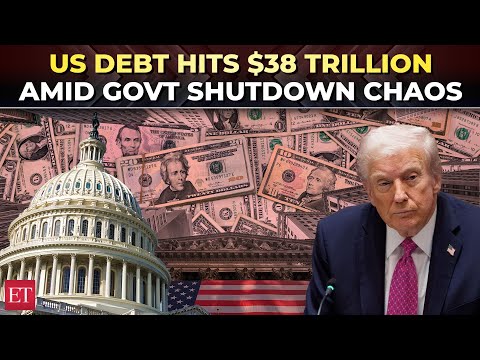
Meanwhile, any future prospects of a renewal of US global leadership look similarly unpromising. Trump’s policy of cutting taxes while increasing the size of the US government debt – which now stands at US$38 trillion, or 120% of GDP – threatens both the stability of the world economy and the ability of the US to finance this mind-boggling deficit.
Tellingly, the Trump administration shows no interest in reviving, or even engaging with, many of the international financial institutions that America once dominated and that helped shape the world economic order – as US trade representative Jamieson Greer expressed disdainfully in the New York Times recently:
Our current, nameless global order, which is dominated by the WTO and is notionally designed to pursue economic efficiency and regulate the trade policies of its 166 member countries, is untenable and unsustainable. The US has paid for this system with the loss of industrial jobs and economic security, and the biggest winner has been China.
While the US is not, so far, withdrawing from the IMF, the Trump administration has urged it to call out China for running such a large trade surplus and has abandoned its concern about climate change. Greer concluded that the US has “subordinated our country’s economic and national security imperatives to a lowest common denominator of global consensus”.
World without a global no.1
To understand the potential dangers ahead, we must go back more than a century to the last time there was no global hegemon. By the time the first world war officially ended with the signing of the Treaty of Versailles on June 28 1919, the international economic order had collapsed. Britain, world leader over the previous century, no longer possessed the economic, political or military clout to enforce its version of globalization.
The UK government, burdened by the huge debts it had taken out to finance the war effort, was forced to make major cuts in public spending. In 1931, it faced a sterling crisis: the pound had to be devalued as the UK exited from the gold standard for good, despite having yielded to the demands of international bankers to cut payments to the unemployed. This was a final sign that Britain had lost its dominant place in the world economic order.
The 1930s were a time of deep political unease and unrest in Britain and many other countries.
In 1936, unemployed workers from Jarrow, a town in northeastern England with 70% unemployment after its shipyards closed, organized a non-political “hunger march” to London, which became known as the Jarrow crusade. More than 200 men, dressed in their Sunday best, marched peacefully in step for over 200 miles, gaining great support along the way. Yet when they reached London, prime minister Stanley Baldwin ignored their petition – and the men were informed their dole money would be docked because they had been unavailable for work over the previous fortnight.

.jpg)
Europe was also facing a severe economic crisis. After Germany’s government refused to pay the reparations agreed in the 1919 Versailles treaty, saying they would bankrupt its economy, the French army occupied the German industrial heartland of the Ruhr and German workers went on strike, supported by their government.
The ensuing struggle fuelled hyperinflation in Germany. By November 1923, it took 200,000 million marks to buy a loaf of bread, and the savings and pensions of the German middle class were wiped out. That month, Adolf Hitler made his first attempt to seize power in the failed “Beer hall putsch” in Munich.
In contrast, across the Atlantic, the US was enjoying a period of postwar prosperity, with a booming stock market and explosive growth of new industries such as car manufacturing. But despite emerging as the world’s strongest economic power, having financed much of the Allied war effort, it was unwilling to grasp the reins of global economic leadership.
The Republican US Congress, having blocked President Woodrow Wilson’s plan for a League of Nations, instead embraced isolationism and washed its hands of Europe’s problems. The US refused to cancel or even reduce the war debts owed it by the Allied nations, which eventually repudiated their debts. In retaliation, the US Congress banned all American banks from lending money to those so-called allies.
Then, in 1929, the affluent American “jazz age” came to an abrupt halt with a stock market crash that wiped off half its value. The country’s largest manufacturer, Ford, closed its doors for a year and laid off all its workers. With a quarter of the nation unemployed, long lines for soup kitchens were seen in every city, while those who had been evicted camped out wherever they could – including in New York’s Central Park, renamed “Hooverville” after the hapless US president of that time, Herbert Hoover.


In rural areas where the collapse in agricultural prices meant farmers could no longer make their living, armed farmers stopped food and milk trucks and destroyed their contents in a vain attempt to limit supply and raise prices. By March 1933, as President Franklin D. Roosevelt took office, the entire US banking system had ground to a standstill, with no one able to withdraw money from a bank account.
With its focus on this devastating Great Depression, the US refused to get involved in attempts at international economic cooperation. With no notice, Roosevelt withdrew from the 1933 London Conference which had been called to stabilize the world’s currencies – sending a message denouncing “the old fetishes of the so-called international bankers.”
With the US following the UK off the gold standard, the resulting currency wars exacerbated the crisis and further weakened European economies. As countries reverted to mercantilist policies of protectionism and trade wars, world trade shrank dramatically.
The situation became even worse in central Europe, where the collapse of the huge Credit-Anstalt bank in Austria in 1931 reverberated around the region. In Germany, as mass unemployment soared, centrist parties were squeezed and armed riots broke out between communist and fascist supporters. When the Nazis came to power, they introduced a policy of autarky, cutting economic ties with the west to build up their military machine.
The economic rivalries and antagonisms that weakened western economies paved the way for the rise of fascism in Germany. In some sense, Hitler – an admirer of the British empire – aspired to be the next hegemonic economic as well as military power, creating his own empire by conquering and ruthlessly exploiting the resources of the rest of Europe.


Nearly a century later, there are some disturbing parallels with that interwar period. Like America after the First World War, Trump insists that countries the US has supported militarily now owe it money for this protection. He wants to encourage currency wars by devaluing the dollar, and raise protectionist barriers to protect domestic industry. The 1920s was also a time when the US sharply limited immigration on eugenic grounds, only allowing it from northern European countries that (the eugenicists argued) would not “pollute the white race”.
Clearly, Trump does not view the lack of international cooperation that could amplify the damaging economic effects of a stock or bond market crash as a problem that should concern him. And in today’s unstable world, for all the US’s past failings as a global leader, that is a very worrying proposition.
How the US responded to the last financial crisis
Once again, the rules of the international order are breaking down. While it is possible that Trump’s approach will not be fully adopted by his successor in the White House, the direction of travel in the US will almost certainly remain sceptical about the benefits of globalisation, with limited support for any worldwide economic rules or initiatives.
We see similar scepticism about the benefits of globalization emerging in other countries, amid the rise of rightwing populist parties in much of Europe and South America – many backed by Trump. Fueling these parties’ support are growing concerns about income inequality, slow growth and immigration that are not being addressed by the current political system – and all of which would be exacerbated by the onset of a new global economic crisis.
With the global economy and financial system far bigger than ever before, a new crisis could be even more severe than the one that occurred in 2008, when the failure of the banking system left the world teetering on the brink of collapse. The scale of that crisis was unprecedented, but key US and UK government officials moved boldly and swiftly.
As a BBC reporter in Washington, to find out the administration’s response I attended the House of Representatives Financial Services Committee hearing three days after Lehman Brothers went bankrupt and paralyzed the global financial system. I remember the stunned look on the face of the committee’s chairman, Barney Frank, when he asked US Treasury secretary Hank Paulson and US Federal Reserve chairman Ben Bernanke how much money they might need to stabilise the situation:
“Let’s start with US$1 trillion,” Bernanke replied coolly. “But we have another US$2 trillion on our balance sheet if we need it.”

Shortly afterward, the US Congress approved a US$700 billion rescue package. While the global economy still has not fully recovered from this crisis, it could have been far worse – possibly as bad as the 1930s – without such intervention.
Around the world, governments ended up pledging US$11 trillion to guarantee the solvency of their banking systems, with the UK government putting up a sum equivalent to the country’s entire yearly GDP. But it was not just governments. At the G20 summit in London in April 2009, a new US$1.1 trillion fund was set up by the IMF to advance money to countries that were getting into financial difficulty.
The G20 also agreed to impose tougher regulatory standards for banks and other financial institutions that would apply globally, to replace the weak regulation of banks that had been one of the main causes of the crisis. As a reporter at that summit, I recall widespread excitement and optimism that the world was finally working together to tackle its global problems, with the host prime minister, Gordon Brown, briefly glowing in the limelight as organizer of that summit.
Behind the scenes, the US Federal Reserve had also been working to contain the crisis by quietly passing on to the world’s other leading central banks nearly US$600 billion in “currency swaps” to ensure they had the dollars they needed to bail out their own banking systems.
The Bank of England secretly lent UK banks £100 billion to ensure they didn’t collapse, although two of the four major banks, Royal Bank of Scotland (now NatWest) and Lloyds, ultimately had to be nationalized (to different extents) to keep the financial system stable.
However, these rescue packages for banks, while much needed to stabilize the global economy, did not extend to many of the victims of the crash – such as the 12 million US households whose homes were now worth less than the mortgages they had taken out to pay for them, or the 40% of households who experienced financial distress during the 18 months after the crash. And the ramifications of the crisis were even greater for those living in developing countries.
A few months after the 2008 financial crisis began, I travelled to Zambia, an African country totally dependent on copper exports for its foreign exchange. I visited the Luanshya copper mine near Ndola in the country’s copper belt. Due to collapsing demand for copper (used mainly in construction and car manufacturing), all the copper mines had closed. Their workers, in one of the few well-paid jobs in Zambia, were forced to leave their comfortable company homes and return to sharing with their relatives in Lusaka without pay.
Zambia’s government was forced to shut down its planned poverty reduction plan, which was to be funded by mining profits. The collapse in exports also damaged the Zambian currency, which dropped sharply. That hit the country’s poorest people hard as it raised the price of food, most of which was imported.

I also visited a flower farm near Lusaka, where Dutch expats Angelique and Watze Elsinga had been growing roses for export for over a decade – employing more than 200 workers, who were given housing and education. As the market for Valentine’s Day roses collapsed, their bankers, Barclays South Africa, suddenly ordered them to repay, immediately, all their loans, forcing them to sell their farm and dismiss their workers. Ultimately, it took a US$3.9 billion loan from the IMF and World Bank to stabilize Zambia’s economy.
Should another global financial crisis hit, it is hard to see the Trump administration (and others that follow) being as sympathetic to the plight of developing countries, or allowing the Federal Reserve to lend major sums to foreign central banks – unless the borrower is a country politically aligned with Trump, such as Argentina. Least likely of all is the idea of Trump working with other countries to develop a global trillion-dollar rescue package to help save the world economy.
Rather, there is a real worry that reckless actions by the Trump administration – and weak global regulation of financial markets – could trigger the next global financial crisis.
What happens if the US bond market collapses?
Economic historians agree that financial crises are endemic in the history of global capitalism, and they have been increasing in frequency since the “hyper-globalization” of the 1970s. From Latin America’s debt crisis in the 1980s to the Asia currency crisis in the late 1990s and the US dotcom stock market collapse in the early 2000s, crises have regularly devastated economies and regions around the world.
Today, the greatest risk is the collapse of the US Treasury bond market, which underpins the global financial system and is involved in 70% of global financial transactions by banks and other financial institutions. Around the world, these institutions have long regarded the US bond market, worth over $30 trillion, as a safe haven, because these “debt securities” are backed by the US central bank, the Federal Reserve.
Increasingly, the unregulated “shadow banking system” – a sector now larger than regulated global banks – is deeply involved in the bond market. Non-bank financial institutions such as private equity, hedge funds, venture capital and pension funds are largely unregulated and, unlike banks, are not required to hold reserves.
Bond market jitters are already unnerving global financial markets, which fear its unravelling could precipitate a banking crisis on the scale of 2008 – with highly leveraged transactions by these non-bank financial institutions leaving them exposed.

Buyers of US bonds are also troubled by the Trump administration’s plan to raise the US deficit even higher to pay for tax cuts – with the national debt now forecast to rise to 134% of US GDP by 2035, up from 120% in 2025. Should this lead to a widespread refusal to buy more US bonds among jittery investors, their value would collapse and interest rates – both in the US and globally – would soar.
The governor of the Bank of England, Andrew Bailey, recently warned that the situation has “worrying echoes of the 2008 financial crisis,” while the head of the IMF, Kristalina Georgieva, said her worries about the collapse of private credit markets sometimes keep her awake at night.
A bad situation would grow even worse if problems in the bond market precipitate a sharp decline in the value of the dollar. The world’s “anchor currency” would no longer be seen as a safe store of value – leading to more withdrawals of funds from the US Treasury bond market, where many foreign governments hold their reserves.
A weaker dollar would also make imported goods more expensive for US consumers, while potentially boosting the country’s exports. This is precisely the course of action advocated by Stephen Miran, chair of the US president’s Council of Economic Advisors – whom Trump appears to want to be the next head of the Federal Reserve.
One example of what could happen if bond markets become destabilized occurred when the shortest-lived prime minister in UK history, Liz Truss, announced huge unfunded tax cuts in her 2022 budget, causing the value of UK gilts (the equivalent of US Treasury bonds) to plummet as interest rates spiked. Within days, the Bank of England was forced to put up an emergency £60 billion rescue fund to avoid major UK pension funds collapsing.
In the case of a US bond market crash, however, there are growing fears that the US government would be unable – and unwilling – to step in to mitigate such damage.
A new era of financial chaos
Just as worrying would be a crash of the US stock market – which, by historic standards, is currently vastly overvalued.
Huge recent increases in the US stock market’s overall value have been driven almost entirely by the “magnificent seven” hi-tech companies, which alone make up a third of its total value. If their big bet on artificial intelligence is not as lucrative as they claim, or is overshadowed by the success of China’s AI systems, a sharp downturn, similar to the dotcom crash of 2000-02, could well occur.
Big tech executives have been overoptimistic before. Reporting from Silicon Valley in 2001 as the dotcom bubble was bursting, I was struck by the unshakeable belief of internet startup CEOs that their share prices could only go up.
Furthermore, their companies’ high stock valuations had allowed them to take over their competitors, thus limiting competition – just as companies such as Google and Meta (Facebook) have since used their highly valued shares to purchase key assets and potential rivals including YouTube, WhatsApp, Instagram and DeepMind. History suggests this is always bad for the economy in the long run.
With the business and financial worlds now ever more closely linked, not only has the frequency of financial crises increased in the last half-century but each crisis has become more interconnected. The 2008 global financial crisis showed how dangerous this can be: a global banking crisis triggered stock market falls, collapses in the value of weak currencies, a debt crisis in developing countries – and, ultimately, a global recession that has taken years to recover from.
The IMF’s latest financial stability report summarized the situation in worrying terms, highlighting “elevated” stability risks as a result of “stretched asset valuations, growing pressure in sovereign bond markets, and the increasing role of non-bank financial institutions. Despite its deep liquidity, the global foreign exchange market remains vulnerable to macrofinancial uncertainty.”
I believe we may be entering a new era of sustained financial chaos during which the seeds sown by the death of globalization – and Trump’s response to it – finally shatter the world economic and political order established after the second world war.
Trump’s high and erratically applied tariffs – aimed most strongly at China – have already made it difficult to reconfigure global supply chains. Even more worrying could be the struggle over the control of key strategic raw materials like the rare earth minerals needed for hi-tech industries, with China banning their export and the US threatening 100% tariffs in return (as well as hoping to take over Greenland, with its as-yet-untapped supply of some of these minerals).
This conflict over rare earths, vital for the computer chips needed for AI, could also threaten the market value of high-flying tech stocks such as Nvidia, the first company to exceed US$4 trillion in value. [Asia Times editors’ update: Peter Thiel is reported to have unloaded his Nvidia shares in the third quarter, as Softbank earlier had been reported to have done with its gigantic holdings in the company.]
The battle for control of critical raw materials could escalate. There is a danger that in some cases, trade wars might become real wars – just as they did in the former era of mercantilism. Many recent and current regional conflicts, from the first Iraq war aimed at the conquest of the oilfields of Kuwait, to the civil war in Sudan over control of the country’s goldmines, are rooted in economic conflicts.
The history of globalization over the past four centuries suggests that the presence of a global superpower – for all its negative sides – has brought a degree of economic stability in an uncertain world.
In contrast, a key lesson of history is that a return to policies of mercantilism – with countries struggling to seize key natural resources for themselves and deny them to their rivals – is most likely a recipe for perpetual conflict. But this time around, in a world full of 10,000 nuclear weapons, miscalculations could be fatal if trust and certainty are undermined.
The challenges ahead are immense – and the weakness of international institutions, the limited visions of most governments and the alienation of many of their citizens are not optimistic signs.
This is the second in a two-part series. In case you missed it, read part one here.
Steve Schifferes is an honorary research fellow, City Political Economy Research Centre, City St George’s, University of London.
This article is republished from The Conversation under a Creative Commons license. Read the original article.
China lent a Trillion to many Western corporations now has huge influences in everything. It makes loser Rooster very mad, as he continues to lose. He’s a forever loser, total loser, only good for giving B Js.
Donald can leverage the next global financial crisis by doing precisely nothing. Let the cards fall as they might.
Don’t worry, the next crisis, the US won’t be on sidelines, the US will be in the gutter. The reason why no country can take the US place has nothing to do with domestic politics in their countries, it has nothing to do with authoritarianism or polarity, it is because the current order is a flaw one, if it work perfectly, how else the US ended up in its current malaise? Who want to take over the broken chair? The world will find a new system and new balance, either by planning or by force of nature. Until then, enjoy this wild ride to unknown.
Put it this way, the Chump administration has crashed and burned sooner than the Biden administration. Now that is what I call Trumpian progress
God bless Chump 🤣🤣🤣🤣
The best thing about Chump is what he learns from reading his autobiography
Big gay Rooster is an @ss hole loser. He will never do well in life, only good at giving B Js. He has nothing, just wastes all day and night making loser insults. Loser, loser, loser @ss hole loser.
Nobody cares for this troll, he offers no substantive arguments, he is just carrying water for the evil American empire while the world moves on. Trying to sell readers the idea that the US is some force to be reckoned with, as the US desperately tries to sell its ugly deformed problem child in Tel Aviv and Kiev as legitimate
Repeat after me : Big Loser Rooster is constantly crazy mad because he is a forever loser. He will never amount to anything in life. A forever loser, loser, loser, only good for gay guys
The orange kosher butler in chief is turning on his MAGA backers. Even the dumbest Republicant dogs can see Trump is compromised and a total fake loser.
I’ve got my popcorn ready for a US stock market crash and ridiculous AI stock valuations being intercepted by the ground.
The 2008 global financial crisis was the best thing ever to happen to China. The deluge of free dollars into the world propelled her economy like State planning never could.
Big Loser Rooster is a total loser. All he can do in life is insult and blame. He will never amount to anything in life. Just good for gay guys. Loser, loser, loser, complete loser.
Big gay Rooster is a complete loser, only good at giving B Js to black weapons. He will never do well in life. He wastes day and night making loser insults. Loser, loser, loser, no friends, no money, no job. Loser!
The US is collapsing and China is the only country that can take advantage of this to the maximum and come out Clean because it has all the worlds REAL production and productive forces.
You want funny money and paper that’s worth less tomorrow, commit sepaku and buy US dollars or stable coin. Demand for it has fallen off a cliff
The canary in the coal mine is that Western women with a brain are already trying to get into China in ever increasing numbers. This is causing a stir with the local women. 🤣🤣🤣🤣
They are welcome in the factories.
Once again the squints and W apologists ignore the elephant in the room.
Each successive financial crisis since 1983 has been papered over by printing money or encouraging China/SE Asia to create consumption.
But it’s coming to an end. EU is in a debt spiral, Russ is in a demographic collapse, China debt spiral/demographic collapse. Slopes cant consume only export. But the US/Eu won’t want to destroy their industry any further… so …
Ch export to Africa, Mid East which destroys their industry and they have no wealth to pay for it.
World wide chaos and war.
Where do you stand Pacman ?
Fffing @hole Rooster. Always a loser. A fffing loser. He can only blame and be a ffig loser for gay guys.
EVs and green tech enhance the economies of Africa and the Middle East: two resource rich regions formerly exploited by the West.
“But the US/Eu won’t want to destroy their industry any further”
Evidence suggests this self-defeating sport is nowhere near its end. To have global compet.itive industry you need 1) cheap energy, 2) cheap labor 3) secure and integrated tech supply chains. The West is losing on all 3, especially with the EU’s cult of Ukraine, the US cult of Zionism and Chump’s tariffs and anti-migrant deportations. China is winning on all 3 fronts. There is plenty of wealth in China. You cannot stop China from trading with the world, because the world wants to trade with China
The battle for rare earths won’t escalate because China’s control will still be absolute.
The battle to get in front of the queue to get these Chinese rare earths wilescalate because China’s control is absolute.
There won’t be a real war because China’s control of the global war fighting components supply chain is absolute.
🤣🤣🤣🤣🤣🤣 Welcome your new overlords
No, it will be a blockade of the squnits. You will starve.
Oh but you don’t live there.
Dear obtuse self gaslighter and capon with the missing pinkie: There will be no attempted blockade because the choke points are in INDEPENDENT NON-WESTERN COUNTRIES who do not want to get played. But keep gaslighting yourself. Other than sucking on large dark sausages, that is what you do best.
Big gay Rooster is a natural born jerk, and loser. He will never do well in life. He can only make loser insults. Loser, loser, no friends, no money, nothing but BJs for curry sausages
You are trying to run before you can walk. If you unable to defeat Houthis and Taliban, you think defeating China is possible. You are dumb like a typical Neocon
He wrote this article after making a trip to China in 2007! I mean, 2007 is 18 years ago! The world especially China’s economic and technological capacities vis-a-vis the US have changed a lot in 18 years.
Yes so many bridges have collapsed since 2007 !
You are suspended on one of them while dealing with three thrusting sausages (large and dark).
Big Loser Rooster is a life long loser. He can long insult and blame. He will never amount to anything in life. Just good for gay guys. Loser. Loser, @hole loser.
Big gay Rooster is a complete jerk loser . He will never do well in life, only good at giving B Js to m○e h@m med sausages. Loser, loser, loser, total loser
How about Boeing crashes!