


Despite years of effort by the Air Force to get rid of the A-10 fleet, the A-10 is playing a major role in the Iran war.
Unlike its predecessors used in the Iraq wars, the A-10 has been reborn with new equipment and better weapons, and significantly enhanced networking capabilities, plus embedded artificial intelligence to enhance the accuracy and lethality of the platform.
There are at least four or five main roles for the A-10 in the conflict.
At the top of the list is dealing with Shahed 136 drones, where the A-10 is using new sensors and improved weapons to knock out these drones, aided by the F-35’s advanced radar that now can hand off targets to the A-10.

Recently the A-10s also are providing maritime force protection as the US Navy hunts down Iranian mine layers.
The A-10s also are knocking out shore-based Iranian missile sites that are being used against Persian Gulf shipping.

A-10s are also destroying Iran’s fast attack boats that threaten Gulf shipping.

Not often reported, but significant, is that the A-10s are also being used in Iraq to go after Iranian proxy militias, like the ones that recently attacked the US Embassy in the Baghdad Green Zone. (Spoiler Alert: Contrary to fake news reports, the latest missile strike on the US Embassy compound did not knock out the C-RAM air defense system on the Embassy grounds.)
The Air Force has a lot of egg on its face. It spent years intimidating congressmen and women to either agree to the A-10’s “retirement” (meaning scrap heap) or lose Air Force business in their districts. Over time, Congress began losing the battle to keep the A-10 in service.
Approximately 597 aircraft have been retired over the lifespan of the program. Of the original 715 airframes produced, the vast majority are now in long-term storage or have been scrapped. The Air Force still intends to fully retire the A-10 by 2029. Congress has prohibited reducing the inventory below 103 aircraft through September 2026.
Just last year, 2025, the Air Force got rid of 56 A-10s. (Those sent to the “boneyard” are being used for parts for the remaining A-10s, since the Air Force does not want to spend money ordering replacements.)
Today the remaining aircraft are operated by the 23rd Wing (”Flying Tigers”) – Moody AFB, Georgia. This is the largest remaining A-10 hub. It operates the 74th and 75th Fighter Squadrons. They will do so at least until the end of this year when the Air Force wants them all sent to the boneyard.
In the Iran war the A-10’s are operating from the Muwaffaq al-Salti Air Base in Jordan which is the central “fortified strategic airpower bastion” for the A-10 fleet.

Since late January 2026, a significant number of A-10s have been forward-deployed to support strikes across the region.
A-10s also operate at the Al-Dhafra Air Base, UAE primarily for “overwatch” of shipping in the Persian Gulf and to intercept Iranian “one-way” attack drones. In addition, the A-10s have been operating from “austere” airfields to enable them to work as closely as possible to the Straits of Hormuz.
The A-10s in the Gulf are using 600-gallon Sargent Fletcher tanks which are now a standard sight on the aircraft’s centerline pylon (Station 6). In the past A-10s did not carry external fuel tanks. The addition extends loiter time over target areas by 45 to 60 minutes.
One of the great features of the A-10 is survivability. The Air Force actually has complained that the A-10 can’t operate in a modern battlefield environment, but this was proven wrong by the “old” A-10s in the earlier Iraq wars, and now by the A-10 in the Iran conflict.

During Operation Desert Storm in 1991, the A-10 suffered its highest number of losses due to the density of Iraqi anti-aircraft artillery (AAA) and surface-to-air missiles (SAMs) with a total combat loss of six aircraft. In that conflict, approximately 70 aircraft (nearly half the deployed fleet of 148–165 A-10s) were hit by anti aircraft and missile fire but survived. Of the 70, 20 had significant damage. In all those cases, the pilots landed their planes.
The A-10 is designed to be robust and survivable. Modern fighter jets, by contrast, if they are hit, are destroyed. Consider the three F-15’s shot down by “friendly fire” over Kuwait on March 1st. Each was hit either by a ground based missile or by a Kuwaiti operated F-18 firing an air to air missile.

There are plenty of reasons for A-10 survivability including a honeycomb matrix airframe design, self-sealing fuel tanks, engines mounted high to make them less vulnerable to IR (infrared) heat-seeking missiles; titanium armor “tubs” to protect the pilot, 360-degree visibility for the pilot, and a unique landing gear design that allows the aircraft to land safely even if the landing gear mechanism is disabled.
Big weapon improvements

The Advanced Precision Kill Weapon System (APKWS II) is currently one of the most important munitions in the US arsenal for the 2026 conflict. Developed by BAE Systems, it is essentially a guidance kit that transforms the unguided 70mm (2.75-inch) Hydra 70 rocket into a precision-guided missile.
The A-10 typically uses two main types of cylindrical launchers for the 2.75-inch (70mm) Hydra 70 rockets – LAU-131 / LAU-68. These are the most common and hold 7 rockets each. Recent intelligence and imagery from CENTCOM (as of March 15, 2026) show A-10Cs operating over Iraq and the Persian Gulf with a single dedicated APKWS pod that contains seven APKWS II laser-guided rockets. These are used primarily against Shahed 136 suicide drones and Iranian fast attack boats that threaten Gulf shipping.

The APKWS kit has been transformed into a drone killer with new software and new proximity fuses, plus a laser to IR handoff system that frees up the pilot to go after another drone while the Hydra completes the targeting cycle and takes out the first Shahed threat.
The software is called the AGR-20F FALCO (Fixed-Wing, Air-Launched, Counter-Unmanned Aircraft Systems Ordnance). It is a specialized air-to-air software and hardware upgrade for the APKWS II laser-guided rocket.
The software upgrade is designed to improve the air to air capability of the Hydra rocket (which was originally designed optimized for ground targets).
The proximity fuse for the Hydra rocket also is new: the Hydra rocket did not have, or need to have, a proximity fuse against ground targets. The new fuse, the SC “VIPER,” explodes in a pattern blast designed to destroy air targets. The fuse uses Radio Frequency (RF) sensors to detect when the rocket is within a lethal radius of a target releasing a cloud of high-velocity fragmentation.
Prior to the use of APKWS, aircraft were using air-to-air missiles such as the AIM-9 to kill enemy drones. These missiles cost $500,000 each (some reports say $900,000 each), meaning the kill cost at least 20 times more than the drone (assuming the Shahed drone costs $20,000).
The APKWS and rocket costs between $30,000 to $35,000 plus the Hydra rocket at around $5,000, making the cost of each shot $40,000, or two times the cost of the Shahed. (Take note that the Shahed-136 cost is reported to be between $20,000 and $50,000 per copy, meaning that the cost of taking out one of these drones may be no more than the cost of the drone itself.)
BAE reported it has delivered around 100,000 APKS guidance kits, meaning that the inventory is more than enough to fight the Iran war as long as necessary. Iran probably has around 20,000 to 40,000 Shaheed-136 suicide drones, and Israel and the US have reportedly destroyed Iran’s drone factories and knocked out many drones and drone storage sites.
If the US had not reduced its fleet of A-10s thanks to US Air Force genius, it could destroy many more Iranian drones.
The other major improvement for the A-10 is that it is now networked with other airborne assets, especially the F-35. A critical improvement is the addition of Link 16 to the A-10. Link 16 is the military tactical data link network used by NATO and allied nations to allow different platforms – aircraft, ships, ground forces – to exchange their “tactical picture” in near real-time.
Unlike older systems, Link 16 is jam-resistant and provides high-speed, secure transfer of data, including images, text messages and relative navigation information. While Link 16 is not yet on all A-10s, if the A-10s survive in the US inventory, Link 16 should be put on all the remaining aircraft.
A-10s are also equipped with the LITENING or Sniper targeting pod that uses a ROVER (Remotely Operated Video Enhanced Receiver) link enabling cooperative targeting. This is known as “buddy lasing.” One A-10 can find a Shahed drone with its pod and “paint” it with a laser, while a second A-10 fires an APKWS rocket that follows that shared laser signal to the target.
The LITENING targeting pod was originally developed by Rafael Advanced Defense Systems (formerly the Rafael Armament Development Authority) in Israel with an upgraded version produced in the US by Northrop Grumman.
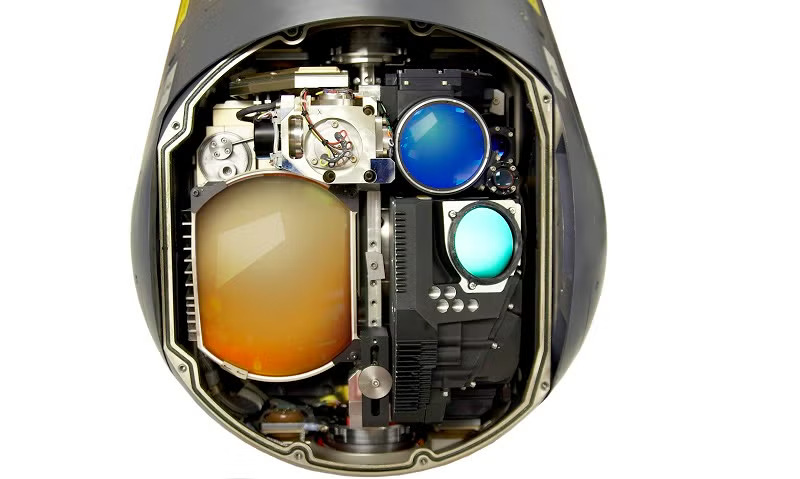
The A-10 over Iranian skies is also using artificial intelligence. AI algorithms on board analyze a target and suggest the best weapon/platform pairing (e.g., GAU-8 cannon vs. APKWS rocket) in roughly eight seconds, compared with 16 minutes for a human operator using manual tables. Onboard AI can also generate up to 10 different attack plans simultaneously, allowing the pilot to select the most viable option rather than spending mental energy calculating flight paths and dive angles.
Originally designed in the 1970s to go after Soviet armor, especially tanks, in any invasion of Europe (forecast to be through the Fulda gap in Germany), the A-10 has found a new and critical role today.
Whether Congress has the courage to stop the Air Force from getting rid of the remaining A-10s is unknown. But it will be a sad day and hurtful to the mission if the A-10 disappears from the scene.
Stephen Bryen is a former US deputy undersecretary of defense. This article first appeared on his newsletter Weapons and Strategy.
Imagine an A-10 drone in action!
Go Hog!
Hahaha……After F-35 the invincible became obviously obvious, now is the time to push A-10 the old affordable?
It is about time the US developed something new and innovative, not a plane that needs 35 hours of maintenance for every hour it flies.
Good to US embracing recycling, a shift to greener warfare
BREAKING NEWS: I am pleased to announce a world first. Iran has successfully hit the mighty invisible F-35 over Iran.
That sound you are hearing is the American ego shriveling up and shrinking in real time.
Damaged only and landed safely would be much more accurate. But verity is not your forté
Would the a10 be effective in the Ukraine?
Yes