


Russia launched its largest single drone attack of the war against Ukraine’s cities on June 1. The Ukrainian Air Force reported that they faced 472 unmanned one-way attack (OWA) drones overnight.
The record may not stand for long. The prior record was on May 26, when Moscow launched some 355 drones. The day before, Russia had set a record with 298 Shaheds, which itself surpassed the May 18 tally.
Russia’s enormous OWA drone attacks came as a surprise to politicians and the general public, but it’s the culmination of years of work by the Russia military. Initially purchased from Iran, Russia began building factories in 2023 to assemble and then manufacture Shaheds (Iranian-designed unmanned drones) in Russia. Greater control over production gave Russia the opportunity to expand the number of Shaheds quickly.
It also helps them gradually upgrade their drones. Investigations into downed Shaheds show that Russia has been coating the drones in carbon, which resists detection by radar by absorbing incoming waves instead of reflecting them back. They have also been adding SIM cards to transmit data back to Russia through mobile networks.
Shaheds also had their warheads upgraded. On May 20, the Ukrainian media reported that Shaheds were using newer incendiary and fragmentation warheads, which start fires and spread large volumes of shrapnel, respectively, to increase their effectiveness.
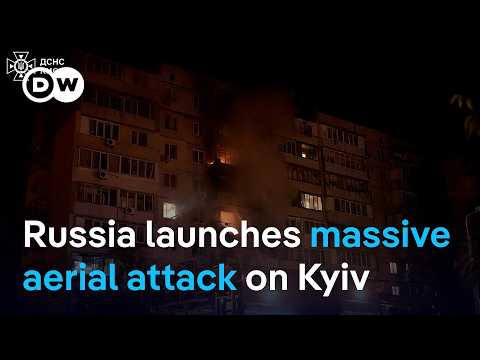
Russia hit Kyiv with its biggest-ever drone strike a few days ago. These upgrades were simple in order to keep the cost of the drone, its major advantage over a missile, under control. These drones are both inexpensive and long-range.
This means that an attacker such as Russia can launch hundreds every month at targets across Ukraine with little concern about how many are lost along the way. Meanwhile, the defender is stuck figuring out how to shoot all incoming drones down at a reasonable cost indefinitely.
The problem is made even more complicated by the fact that air defence systems are sorely needed at the front line to shoot down hostile aircraft, making it a difficult trade-off.
Adding to the problem is the recent production of decoy Shaheds. While they carry no warhead and pose little threat by themselves, Ukrainian air defense cannot always tell the decoy from the real thing and still need to shoot them down. In late May, Ukrainian officials told the media that up to 40% of incoming Shaheds were decoys.
Consequently, Russia’s 472-drone attack reflects all of Russia’s innovations so far. These have improved the number of drones that survive, increased lethality, while using decoys alongside armed drones to ensure as many as possible reach their target.
What are the challenges for Ukraine?
Ukraine shoots most incoming Shaheds down. Even the 472-drone attack still had 382 claimed interceptions, a rate of 81%. However, the relatively high interception rate disguises the Shahed’s benefits for Russia.
Shaheds are cheap by military standards, so launching constant attacks is a disproportionate burden for Ukrainian air defence units. Kyiv has mobilized an enormous amount of resources to protect its cities, from mobile units in trucks to counter-Shahed drones that function like a cheaper anti-aircraft missile.
That said, these systems often have short ranges, which means that the savings per interception are somewhat offset by the need to maintain many hundreds of systems across a country as large as Ukraine. Ukraine also has the option of trying to strike Russia’s Shahed factories, which they have attempted a few times.
Despite Ukraine’s evolving air defense, Russia still sees military benefits to constant Shahed attacks. In a study I contributed to last year, we found that Russia’s initial OWA drone strategy in 2022 and 2023 did little to force Ukraine to negotiate an end to the war on terms favorable to Russia.
That may still be the case now, but the volume of drones and the high tempo of attacks means that Russian strategy could well be aimed at systematically exhausting Ukrainian air defenses.
As Ukraine grapples with unpredictable US military support, Kyiv is more vulnerable to running out of ammunition for its more advanced air defense systems. This means that constant Shahed attacks make it more difficult for Ukraine to stop incoming missiles, which carry much larger warheads.

Of course, Ukraine has its own versions of the Shahed, which it uses to routinely launch strikes against Russian military and oil facilities. Less is known about Ukraine’s OWA drones, but they often use many similar features to Shaheds such as satellite navigation.
For Russia’s Vladimir Putin, using Shaheds is not all about military benefit. Politically, he has increasingly used Shahed attacks to project a sense of power to his domestic audiences. On May 9, Russia paraded Shaheds through Moscow’s streets as part of its annual Victory Day celebrations, which had not been done in years past.
Ukraine has begun employing its own OWA drones as part of the “Spiderweb” operation to attack military and oil infrastructure across Russia.
Russia’s 472-drone attack is unlikely to remain its largest attack for long. Putin has shown a determination to expand the scale and tempo of his drone campaign and resist Ukraine’s calls for a permanent “ceasefire in the sky”, but this week Ukraine’s drone strategy has shown that prolonging the drone war can also have serious and unexpected effects for Moscow.
So long as the conflict continues, Ukraine’s defenders will find themselves facing more, and better, drones aimed at their cities. But increasingly, it looks like Russia must worry about Ukraine’s drone capabilities too.
Marcel Plichta is PhD Candidate in the School of International Relations, University of St Andrews
This article is republished from The Conversation under a Creative Commons license. Read the original article.
The article, albeit informative, is far too propaganda heavy. It took Ukraine nearly 2 years until they reported less shootdowns than targets started. Russian blogs loved to mock that. The 81% shootdown rate still is not really credible. Ukrainian reporting is too propaganda heavy and leaned towards exaggerations. Problem is also the totalitarian rule of SBU and GUR. Ukrainian bloggers critical to the regime or reporting of the heavily censored media have no choice than leaving the country, given they can do that. Anatoly Shary, certainly not a friend of Russia, has to hide and run for life from Ukrainian killers even in Spain.
Ukraine has larger UAV industry now, they will respond eventually and since Russia is still escalating agression sometime Ukraine will decide to target main population centers in Russia the same way Russia is targeting Ukrainian cities. Country already has enough drones to make havoc if it wants… so it seems Russia did not learned much. And western idiots too.
What the author wanted to say, he probably didn’t understand himself. Let me help. Russia launches a lot of drones, Ukraine lies that it shoots down a lot. To support Ukraine, we will write that it shoots down almost everything. But for some reason, Ukraine is having a very hard time. Since we don’t feel sorry for the Ukrainians, let them fight some mor
It’s always very entertaining to read the comments of Russian orcs. Extremely belligerent and absolutely misanthropic. Even the language of the Third Reich seems peaceful and friendly. It’s a disgrace and a great humiliation for Poo-tin and his executioners and orcs that Russia now has to beg China, Iran, and North Korea for technological help. Without this triad, Poo-tin and his Russia would have been broke long ago. Furthermore, Poo-tin is fast-tracking Russia into the Chinese debt trap. Just ask Sri Lanka, for example, how the Chinese debt trap bites.