


Australia is ramping up plans to bolster its missile arsenal after China’s recent naval operations near major Australian cities, an unprecedented circumnavigation exercise that included live-fire war games off its eastern coast in the Tasman Sea.
China’s maneuvers, which tested the ability to maintain “actual combat alert status”, disrupted regional air traffic while underscoring its growing naval assertiveness and capability to project power close to Australian shores.
This month, Reuters reported that Australia is intensifying its military preparedness vis-à-vis China with plans to equip its troops with advanced long-range anti-ship missiles.
Australia is reportedly evaluating two missile systems, including the Naval Strike Missile (NSM) from Norway’s Kongsberg and Lockheed Martin’s Precision Strike Missile (PrSM), with a final selection expected by late 2025.
The PrSM, which can be deployed via High Mobility Artillery Rocket System (HIMARS) mobile launchers, has a 500-kilometer range. The Increment 4 upgrade currently under development will push the range beyond 1,000 kilometers. Australia has ordered 42 HIMARS launchers slated for operation by 2026-27.
The initiative aligns with Australia’s broader strategy to address what officials have termed the “greatest strategic uncertainty” since World War II. Over the next decade, Australia plans to invest US$46 billion in missile production, targeting technology and long-range strike capacity. Defense experts indicate that land-based mobile missile systems offer cost-effective and flexible deterrence.
China’s February 2025 circumnavigation of Australia may call into question Canberra’s 2024 National Defense Strategy, which emphasizes an “impactful projection” doctrine focused on long-range strike capabilities to deter threats and protect national security.
According to the strategy, the Australian Defence Force (ADF) is being reshaped into an integrated, focused force capable of projecting military power beyond its borders. Long-range ship and land-based missile systems are central to the strategy.
However, Australia’s naval and land-based long-range strike capabilities are currently lacking. In December 2024, Australia test-fired the US Tomahawk cruise missile with a 2,500-kilometer range from the HMAS Brisbane destroyer and has announced plans to acquire 200 such missiles.
While the Tomahawk is a formidable weapon, Marcus Hellyer argues in a February 2021 article for the Australian Strategic Policy Institute (ASPI) that it may not achieve its desired deterrent effect, as Australia will not have enough ships to carry the necessary number of missiles to make a difference in a conflict with China.
Hellyer points out that Australia’s three Hobart class destroyers have only 48 vertical launch systems (VLS) cells, dwarfed by the 96 aboard the US Arleigh Burke destroyer and the 112 on China’s Type 055 cruiser. He notes that the six upcoming Hunter class frigates will only have 32 VLS and won’t be ready for service until the 2030s.
In a January 2023 ASPI article, Lesley Seebeck argues that the NSM and current-generation PrSM, both with relatively short ranges of up to 500 kilometers, are short-term fixes better suited for area denial than deterrence.
At the same time, she says relying on long-range missiles for deterrence may not be sustainable at US$3 million for each NSM and $3.5 million per PrSM, and that Australia’s defense industry may take up to 10 years to reach sustainable production of such ordnance.
Moreover, Seebeck points out that Australia’s calculus about what it could deny versus what it could deter is unclear. She stresses that it is wrong to conflate denial with deterrence, as the former is a military matter, while the latter is political.
She argues Canberra has not given enough thought to identifying which targets to hold at risk to deter a possible adversary, as opposed to what the ADF could deny. In addition, she mentions that whatever Australia could hit that may deter a potential adversary would most likely be located deep in enemy territory.
While Australia operates F-35A stealth fighters that could be used for penetrating long-range strikes, including against China, Harrison Kass mentions in a March 2024 article for The National Interest (TNI) that the F-35A, capable of traveling only 1,600 kilometers, lacks sufficient range for such a role.
To reach the South China Sea or Taiwan Strait, Australia’s F-35As may depend on tankers vulnerable to China’s long-range missiles. Alternatively, it could use forward bases in a partner country like the Philippines, but those bases are within range of most Chinese missiles.
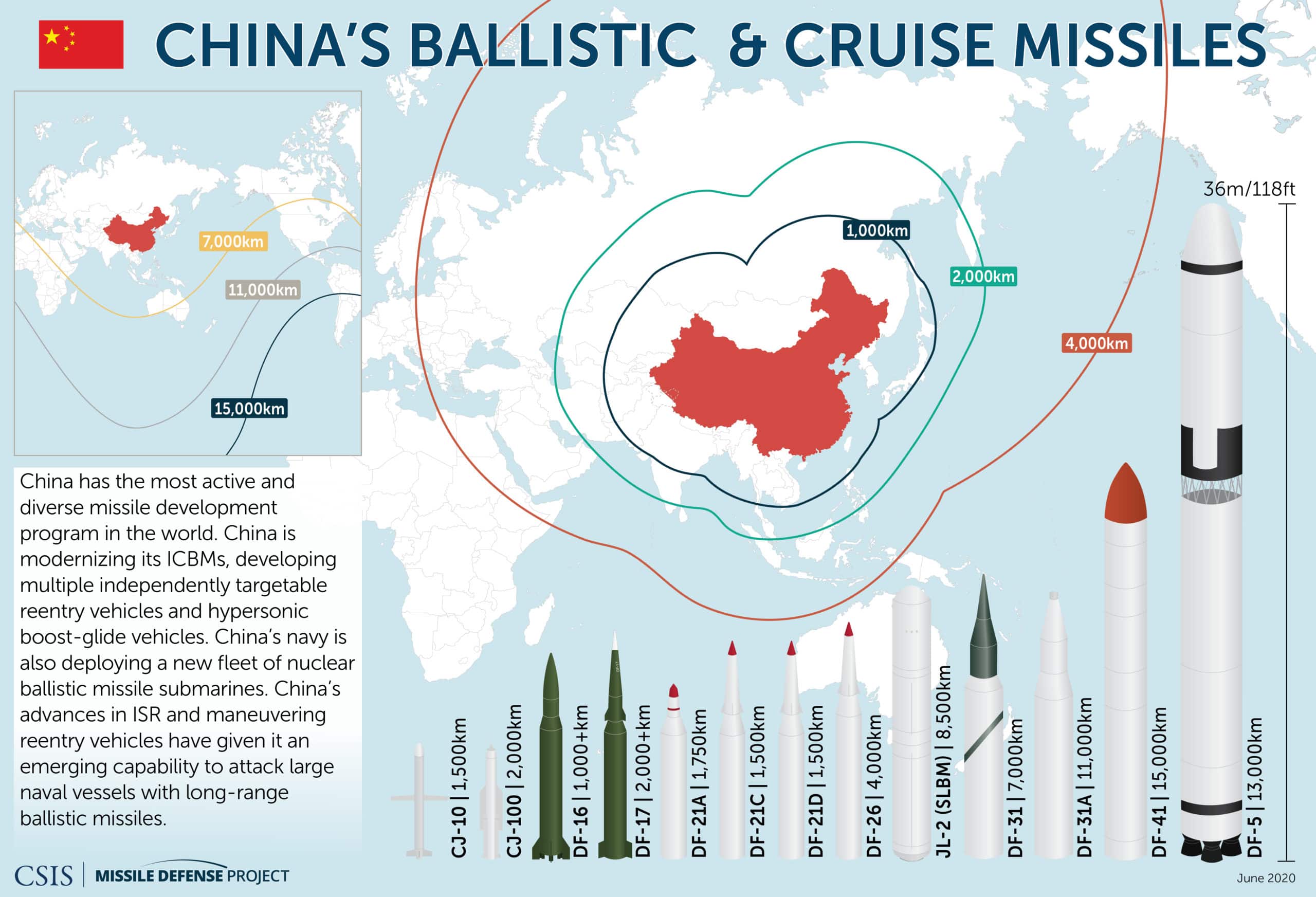
A few Australian F-35As with long-range missiles may only inflict pinprick damage to a country the size of China. Also, considering China’s missile arsenal, it could retaliate against Australia much more forcefully than the latter can hit it.
Further, it is doubtful for any Philippine president to authorize offensive strikes by a third party, such as the US or Australia, against China except in the improbable scenario of an attack on its main islands. That is, it is unlikely that any Philippine president would risk turning neighboring China into a long-term adversary by allowing such strikes from its territory.
In line with that, Marigold Black and Austin Wyatt argue in a March 2023 RAND commentary that Australia’s impactful projection doctrine may rest on a flawed assumption due to its oversight of regional neutrality dynamics.
Black and Wyatt argue that Australia’s strategy presumes regional acquiescence to its enhanced strike capabilities, yet the Association of Southeast Asian Nations (ASEAN) longstanding neutrality, rooted in the Treaty of Amity and Cooperation (TAC), challenges this assumption.
They say that ASEAN neutrality could undermine Australia’s security designs, including by refusing overflight rights and thus undermining its operational reach. For instance, Graham Jenkins says in a 2022 article for the Joint Force Quarterly that Indonesia has taken a hard nationalist position on its airspace, as seen in its refusal to join regional open skies regimes.
As with the Philippines, Jenkins says Indonesia’s position on overflight rights may be influenced by its fear of China’s retaliation should it allow the US and Australia to use its airspace for military operations.
Further, Black and Wyatt mention that Australia’s lack of nuanced engagement with regional partners, exemplified by AUKUS’s secrecy, erodes trust. They say this strategic miscalculation risks a “strategic shock” if neutrality disrupts Australia’s defense planning, highlighting the need for impactful engagement over power projection.
AUSTRALIA DOES NOT HAVE A ” CHINAMANS CHANCE ” .
Not when China is the bull.
Small weapons, Wee Willy
Big enough to do in the Capon.
At least Australia has it’s American atomic subs. Oh, no, wait, it’ll get those in 2075.
Before then, there will be a sharing of UK/US subs. ie increasing numbers of Aussies on the crews.
But you’re right, by 2075 China will be finished, too old and a shrinking population of weedy men.
Australia will buy Indian missiles that boomerang on the shooter.
Australia should in invest in long range, maritime reconnaissance bombers, deploying whatever missiles are appropriate. Moreover, not pay through the nose for other country’s weapons, rather employ their own brains.
The brains tend to leave for the US/UK
You mean those dragon-chasing potheads?
Aussies can’t make anyone happy these days. How much Trump tariffs now? China parading war ships around 41,340 miles of coast line. So, how many 500 km range missiles will be needed? F35’s has a range of 1600 km, so air strips are needed all over. Why Trump tariffs, maybe Aussies have too much trade with China, maybe – why not – don’t leave out Australia, Old Donnie wants to have every one like him equally.
Have you paid your respects to the elders, past present and future?
Australia followed the US in the immoral invasion of Vietnam, and what happened? Have they learned anything from history? Now they are following the US again to confront their biggest trading partner and customer which also happens to be a superpower on its path to become the biggest economy soon with formidable military and technological capabilities. They are wasting billions and billions, and for what? Just mind bogglingly stupid!
What about China’s immoral invasion of Vietnam in 1979, you got your backsides handed to you.
Vietnam and India are begging China to build their infrastructure after failed Japanese efforts. So, who’s your daddy?
I think Australia’s defence posture is complicated by being unable to decide whether they are defending Australia or Taiwan?
The cat is in a wok, or the coolie is in a hat ?
Tastes like a pan-fried Capon.
A waste of money better spent on diplomacy and commerce.
Australia has no real enemies. It’s spending big money on mainly US weapons because the Mafia boss is insisting that Austrlia pays him protection money.
I disagree. It’s a democracy so it must have enemies. Like all those open defecators. Don’t want them in your backyard. I suppose that’s why they hate their Aboriginals so much. I don’t think the Aussies can do much given their size. They need the US like a bad rash.
Don’t mention size to a Chinaman, they get very defensive
So said the castrated Capon.