


Reports of a phone call between the US president-elect, Donald Trump, and his Russian counterpart, Vladimir Putin (although quickly denied by the Kremlin) have given a first flavor of the tone and direction of their relationship in the immediate future. According to the Washington Post, Trump spoke with Putin on November 7, warning him against any escalation in Ukraine and reminding him of “Washington’s sizeable military presence in Europe.”
Regardless of whether it happened or not, any – if even only indirect – exchange of messages between the pair should be heeded by America’s allies in the West, as well as Russia’s major partner to his east: China’s Xi Jinping. And there has been plenty of such messaging over the past few months.
Putin, earlier on the day of the alleged phone call, gave a long address at the annual meeting of the Valdai Discussion Club think tank in the Black Sea resort of Sochi. Unsurprisingly, the speech – and Putin’s answers to questions from the audience afterwards – were anti-Western and full of confidence that a new world order was now in “the phase of genuine creation.”
But at the same time, Putin took pains to flatter Trump as a “courageous man,” saying he’d consider any proposals from Trump aimed at restoring US-Russia relations and ending what Putin called the “Ukrainian crisis.”
But he then spent considerably more time making the case for the relationship between Russia and China. Here his audience was less the incoming US president and more his old friend the Chinese president.
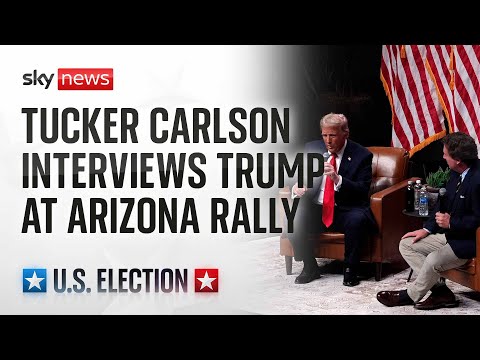
The reason for this goes back to one of Trump’s messages to Putin and Xi. Trump told Tucker Carlson at a campaign event on October 31 that he would work to “un-unite” Russia and China. Trump implied that the two are “natural enemies” because Russia has vast territory that China covets for its population.
Russia and China have a history of conflict over territory along their long land border in Siberia. This was part of the Sino-Soviet split in the 1960s, which preceded the US opening to China under then-president Richard Nixon in the 1970s.
In contrast to Nixon, Trump looks set to try to reset US relations with Moscow rather than Beijing. While it’s hard to imagine a similar split between Russia and China today, Trump’s apparent desire to exploit discord between Russia and China to the advantage of the US should not be dismissed as completely unrealistic either.
On the face of it, Putin and Xi are closely aligned. But a deeper dive into the relationship between Russia and China suggests it’s primarily one between their current leaders and lacks much of the institutional depth that other alliances have.
There is a lot of resentment of China in Russia in both public and policy circles. Russians remain wary of China’s growing role in Central Asia and worry about the potential for disputes over long-contested borders. Many are also resentful of the fact that Moscow is now a junior partner to Beijing.
These are potentially all issues that Trump could use to drive a wedge between Russia and China. But a lot hinges on what Putin perceives is in it for Russia. This should be focusing minds in the West about what shape Trump’s Ukraine policy will take and what this means for Ukraine and the West.
A Trump-brokered agreement is likely to involve the recognition of Russian territorial gains in Ukraine since 2014, complete sanctions relief and broad international rehabilitation granted to Moscow. It would surely also involve a down-scaling of the US commitment to NATO and a pledge not to pursue further enlargement of the alliance.
Trump might get a deal with Putin, but whether Putin would stick to it is questionable. Putin is much more likely to simply play both sides in the hope that Russia might in this way become a third peer alongside China and the US in an emerging new international order.
This is of course a complete fantasy, given the size of the Russian economy alone – but that’s unlikely to affect Putin’s calculations, given his longing to restore Russia’s superpower status.
Chinese leverage
An American opening to Moscow, as opposed to Beijing, is also difficult to imagine because America’s European partners are unlikely to go along with it. Some, including Hungary’s Viktor Orbán and Slovakia’s Robert Fico, might find the idea attractive in general. But Germany and France, among others in the EU, are more likely to want to make a deal with China.
The reason for this is economic – they have largely overcome their dependence on Russian oil and gas, but not on China as an export market.
Beijing, meanwhile, won’t sit idly by while Trump tries to drive a wedge between Russia and China. Despite Putin’s efforts to build parallel relations with North Korea and Iran, Xi retains plenty of economic leverage over Russia and is going to use it to keep Russia on side.
Diplomatically, Putin depends on Xi and China-led outfits such as the Shanghai Cooperation Organisation and BRICS. While there are differences between Moscow and Beijing, they also both share a world view of a US in terminal decline – which is now likely to be further accelerated by the upheaval expected from a second Trump term.
For China in particular, preventing the US from completely pivoting to the Indo-Pacific will be a key priority – and not allowing Trump to cut a deal with Putin at China’s expense will be high on Xi’s agenda as a means to achieving that end.
Trump might still try to open up to Russia by striking a deal with Putin over Ukraine. But such a deal with Putin is not the same as dividing Russia and China. On the contrary, it is more likely to “un-unite” Europe and the US and weaken the trans-Atlantic alliance further.
Rather than making America great again, Trump could further hasten its decline by mistakenly contributing to the destruction of what is left of the liberal international order instead of reshaping it according to US interests.
Stefan Wolff is a professor of international security at the University of Birmingham.
This article is republished from The Conversation under a Creative Commons license. Read the original article.
Macron recently asked to be invited to the last BRICS meeting and even mentioned the perspective of France applying to BRICS membership. It must not have been a joke. Besides an Asian or Eurasian tropism has long – back to 17th century Leibniz – been a feature not only of Hungary and Slovakia, but also of Germany, DE Gaule’s France, Greece, the Balkans and of course Russia. Leibniz thought that Europe should ally with China to control Islam and “civilize” Russia. Stefan Wolf still projects the image of Europe as seen by Mac Kinder, as the UK wants it to be. But for many Continentals Russian are Europeans, Tolstoï, Dostoïvsky, Rimsky-Korsakow are Europeans. Europe will not be complete without Russia. And we will let England to the USA…
About two decades ago I was talking to a well known British historian in a London pub. I asked him: Did anybody notice in this country that Britain lost a whole Empire after WWII? He raised his hand, meaning that he noticed the event.
After 1991 it was clear that the Russian Federation was eager to join the Western World, expressed in many different ways by Boris Yeltsin and his whole society. Russia was refused by those who should not even exist in the Western World. Today, we are living with the catastrophic consequences of our weaknesses as we allowed these elements to continue with their subversive acts.
Russia understands very well after 2 years of war in Ukraine that manufacturing capability is the foundation of western alliance. Western propaganda about democracy can make the country rich is collapsing. US became the superpower due to the transfer of wealth and talent from WWI and WWII. the countries want to ally with US due to their number 1 manufacturing capability 40% of world output in 1960. Military capability and innovation is just the byproducts of the industrialization
This article is nonsense, very typical of Western wishful thinking. Russia and China are very well aware of American insincere attempts to woo them. They have much longer time horizons to work with. The American political system is tailored for infantile mentalities and short termism. The growing strategic alliance in Eurasia is a no brainer. Eurasia has all the human capital, natural resources and industrial capacity it needs. The world’s most sophisticated and oldest civilizations are all cooperating to break the evil empire and give it a nice farewell in the form of death by a thousand cuts. Chess is what Eurasians play. Whack-a-mole is what New World Evangelism plays.
Putin is unlikely to trust the USA again, even if Trump can smash the Deep State with it’s forever wars.
But he’s 71 and heading for a Biden-esque twilight. The Oligarchs want to be able to buy stuff in London and NY. They also see how China is taking over Siberia.
The hypocritical EU just wants business as normal with cheap Russ gas.
Long term Russia will pivot West again and become smaller (land/population) and weaker.
China will age quickly.
US? It’s really in a hole but if Trump, JD, Kennedy, etc can’t turn it round, then it’s too late.
The 5th Column of starry eyed Russian Oligarchs are now past the honeymoon phase with the West. What is the point of storing wealth in London and New York when it will be stolen and frozen? India is repatriating its gold reserves back home. Nobody can or should trust the Anglo Saxons in London and New York, they have destroyed their credibility. They have been pirates all along.
Tell that to the oligarchs, they don’t seem to want a house in Peking.
The only real market left in the world is along the Belt and road + BRIC. either way USD or the west will be down permanently
Debt diplomacy!