


For PLC read PLA. While Huawei might not be a public limited company, founder Ren Zhengfei did have a distinguished career in the People’s Liberation Army before setting up the telecom giant.
His connections were useful in building a Chinese conglomerate which has become a symbol of high-tech achievement and ambition in the world’s second-largest economy.
Cheap loans from state-owned banks helped Huawei expand in the early days after Ren started the company with 21,000 yuan (then US$4,400) of his own money in 1987.
This was a time when former and active PLA personnel were branching out in big business as China opened up to the world through economic reforms rolled out by Paramount Leader Deng Xiaoping.
“In recent years the People’s Liberation Army has acquired a considerable reputation for its business activities,” a 1994 report entitled The Chinese Military and Its Business Operations: The PLA as Entrepreneur, highlighted. “These activities represent a significant and far-reaching change.”
Fast forward 24 years and there are lingering concerns that Ren’s “family business” is too closely aligned to China’s government, claims which Huawei has repeatedly denied.
In an effort to dispel these allegations and accusations of “cyber-security issues,” the Shenzhen-based super company has adopted a simple approach.
‘Cyber-security issues’
“Huawei has no connection to the cyber-security issues the US has encountered in the past, current, and future,” Ren, now 74, told the Chinese media in a rare interview five years ago.
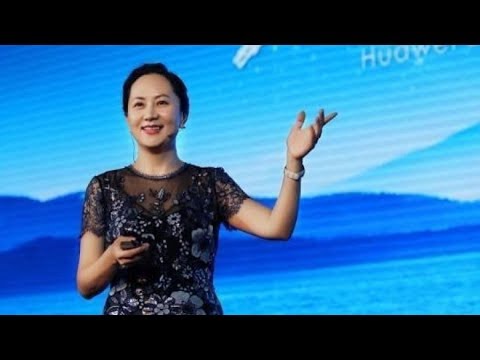
But the assertions have resurfaced after his daughter Meng Wanzhou was arrested in Canada earlier this week over reported links to violations of sanctions imposed on Iran by the United States.
The 46-year-old chief financial officer and deputy chairwoman of Huawei faces extradition to the US, which could, in turn, derail a fragile trade war truce between Washington and Beijing.
Last weekend at the Group of 20 summit in Buenos Aires, American President Donald Trump signaled that a breakthrough might be achieved after his dinner date with China’s head of state Xi Jinping.
Since then, G20 euphoria has quickly turned into enmity after the state-controlled media’s rhetorical broadside following Meng’s arrest.
On Friday, the Global Times accused the US of “despicable hooliganism” while the China Daily said Washington was “trying to do whatever it” could “to contain Huawei’s expansion” because it was “the point man for China’s competitive technology companies.”
“The latest Huawei incident shows that we should get ready for long-term confrontation between China and the US, as the US will not ease its stance on China and the arrest of a senior executive of a major Chinese tech company is a vivid example,” Mei Xinyu, a research fellow with the Chinese Academy of International Trade and Economic Cooperation, said.
Legal battle
Still, these are dark days for the group.
In October, Huawei lost a long-standing legal battle over technology violations in the United Kingdom and could end up with a multi-million-dollar bill.
The case dated back to 2014 when Huawei was accused of patent infringements from Unwired Planet, a mobile data, software and services company based in Redwood City at the heart of Silicon Valley.
“The Court of Appeal on Tuesday dismissed the Chinese firm’s appeal, and stated that it should pay a global license fee for infringing Unwired Planet’s patents to avoid a sales injunction in the UK,” the Daily Telegraph, a major UK newspaper, reported on October 23.
“Huawei, already the subject of international scrutiny over its ties to the Chinese military, is now seeking permission to appeal the decision in the UK Supreme Court,” it added.
In response, a Huawei spokesman said:
“Irrespective of the ultimate outcome of the case, Huawei does not believe that the Court’s decision will adversely affect its business operations either in the United Kingdom or in other countries.”
While that might have been true six weeks ago, the jury now looks out on Ren’s high-tech creation after Meng’s high-profile arrest.
The often repeated story of the founder who at one time served in PLA is another attempt to demonize China by this writer. How many ex-military type are in business in the U.S.? I even served on the board with an ex-Navy Admiral. Does that mean our company is a tool of the U.S. government? Absolutely nuts.
The often repeated story of the founder who at one time served in PLA is another attempt to demonize China by this writer. How many ex-military type are in business in the U.S.? I even served on the board with an ex-Navy Admiral. Does that mean our company is a tool of the U.S. government? Absolutely nuts.
Winston Medved sausages of STDs
Winston Medved sausages of STDs
I know Huawei, they give me a pot of honey every week
I know Huawei, they give me a pot of honey every week
Well siad comrade, our arrest of the Interpol Head shows we have got our retaliation in first.
Well siad comrade, our arrest of the Interpol Head shows we have got our retaliation in first.
Can’t read chinese . Is that makes you wonder why he so stupid. Better sell pinays for a living
That make you loser crybaby
That make you loser crybaby
Cry louder
Cry louder
More like cia fake news than contraversy
More like cia fake news than contraversy
This writer Mr. Watts does not know Huawei and simply foist whatever canard he chooses to tell. Huawei started from the home of the founder Mr. Ren at the time when the major cities and major telephone companies were in the pocket of the giant State-Owned Enterprises. Mr. Ren went after the remote provinces and cities offering to customer build switch systems tailored to the needs and small budgets of those peripheral small customers. By that necessity Huawei worked hard to provide the products and services the smaller customers needed and gained their trust. Keeping faith with customer relations was what grew Huawei. So this Mr. Watts is telling you an assumed tale totally out of fiction. This smells not just bias but lying with ignorance. As for getting cheap loans, when Huawei was small, no way was he able to get cheap loans as major bankers in China are the same as bankers everywhere, going with the large clients first of all, easier life, simpler paper work.
When Huawei started to offer parts and switches, there were between 100-200 competitors in the crowded telecom provision niche industry. By being just a little bit more customer oriented, they slowly gained their customers. Mr. Ren should also be given immense credit for his egalitarian approach with his employees for he did not treat them as employees rather team members. He retained a very small portion of the shares for himself so that today Huawei is an employee-owned enterprise where a large group of early associates are very rich too. Employees get shares from their performance and so the company remain a private company.
By his unselfish behaviour, Mr. Ren has created an esprit de corps that makes people want to succeed with the company, for the company. That keeps the motivation and the innovative spririt high. Huawei is the first large corporation to institute a rotationg CEO system of 6 persons and it has certainly given them tremendous depth in leadership talent.
Huawei is a classic example of a responsible corporate culture that does most things according to what I deem to be best practices. If political bias does not go into the attacks instigated by reactinaries in the west, Huawei will continue to serve their customers well in both the enterprise telecom level and the end-user handset cellphones level. With purposeful extra-commercial attacks from right wing, or colonial vestige persons in the west, Huawei may lose specific western markets. But being in 170 countries, Huawei will provide all the smaller nations with 5G which will mean the west falling behind, ever faster.
5G starts a playing field that will be unforgiving. If you do not have the best practices, the slip-ups will be very damaging to not just the cell phones, but most industries, most aspects of everyday life, and most future new and emerging industries as well. In being selfish, the west thinks of trying harm Huawei’s progress. But innovation is like water. You cannot stop it from flowing around you and still flow to the ultimate destinations. The only way to block Huawei is to compete in investment into education, research and technology. Yes emulate Huawei’s best practices and out-compete Huawei. If you do you will find more reason to work in cooperation with Huawei than being scared of them.
The best revenge for Huawei is to keep climbing the exponential innovation curve they have created for themselves. When they have superior technology as the everyday consumer in the cellphone niche can see, they do not have to attack their competitors with underhanded tactics..
This writer Mr. Watts does not know Huawei and simply foist whatever canard he chooses to tell. Huawei started from the home of the founder Mr. Ren at the time when the major cities and major telephone companies were in the pocket of the giant State-Owned Enterprises. Mr. Ren went after the remote provinces and cities offering to customer build switch systems tailored to the needs and small budgets of those peripheral small customers. By that necessity Huawei worked hard to provide the products and services the smaller customers needed and gained their trust. Keeping faith with customer relations was what grew Huawei. So this Mr. Watts is telling you an assumed tale totally out of fiction. This smells not just bias but lying with ignorance. As for getting cheap loans, when Huawei was small, no way was he able to get cheap loans as major bankers in China are the same as bankers everywhere, going with the large clients first of all, easier life, simpler paper work.
When Huawei started to offer parts and switches, there were between 100-200 competitors in the crowded telecom provision niche industry. By being just a little bit more customer oriented, they slowly gained their customers. Mr. Ren should also be given immense credit for his egalitarian approach with his employees for he did not treat them as employees rather team members. He retained a very small portion of the shares for himself so that today Huawei is an employee-owned enterprise where a large group of early associates are very rich too. Employees get shares from their performance and so the company remain a private company.
By his unselfish behaviour, Mr. Ren has created an esprit de corps that makes people want to succeed with the company, for the company. That keeps the motivation and the innovative spririt high. Huawei is the first large corporation to institute a rotationg CEO system of 6 persons and it has certainly given them tremendous depth in leadership talent.
Huawei is a classic example of a responsible corporate culture that does most things according to what I deem to be best practices. If political bias does not go into the attacks instigated by reactinaries in the west, Huawei will continue to serve their customers well in both the enterprise telecom level and the end-user handset cellphones level. With purposeful extra-commercial attacks from right wing, or colonial vestige persons in the west, Huawei may lose specific western markets. But being in 170 countries, Huawei will provide all the smaller nations with 5G which will mean the west falling behind, ever faster.
5G starts a playing field that will be unforgiving. If you do not have the best practices, the slip-ups will be very damaging to not just the cell phones, but most industries, most aspects of everyday life, and most future new and emerging industries as well. In being selfish, the west thinks of trying harm Huawei’s progress. But innovation is like water. You cannot stop it from flowing around you and still flow to the ultimate destinations. The only way to block Huawei is to compete in investment into education, research and technology. Yes emulate Huawei’s best practices and out-compete Huawei. If you do you will find more reason to work in cooperation with Huawei than being scared of them.
The best revenge for Huawei is to keep climbing the exponential innovation curve they have created for themselves. When they have superior technology as the everyday consumer in the cellphone niche can see, they do not have to attack their competitors with underhanded tactics..
So racism shows up in your ugly face.